


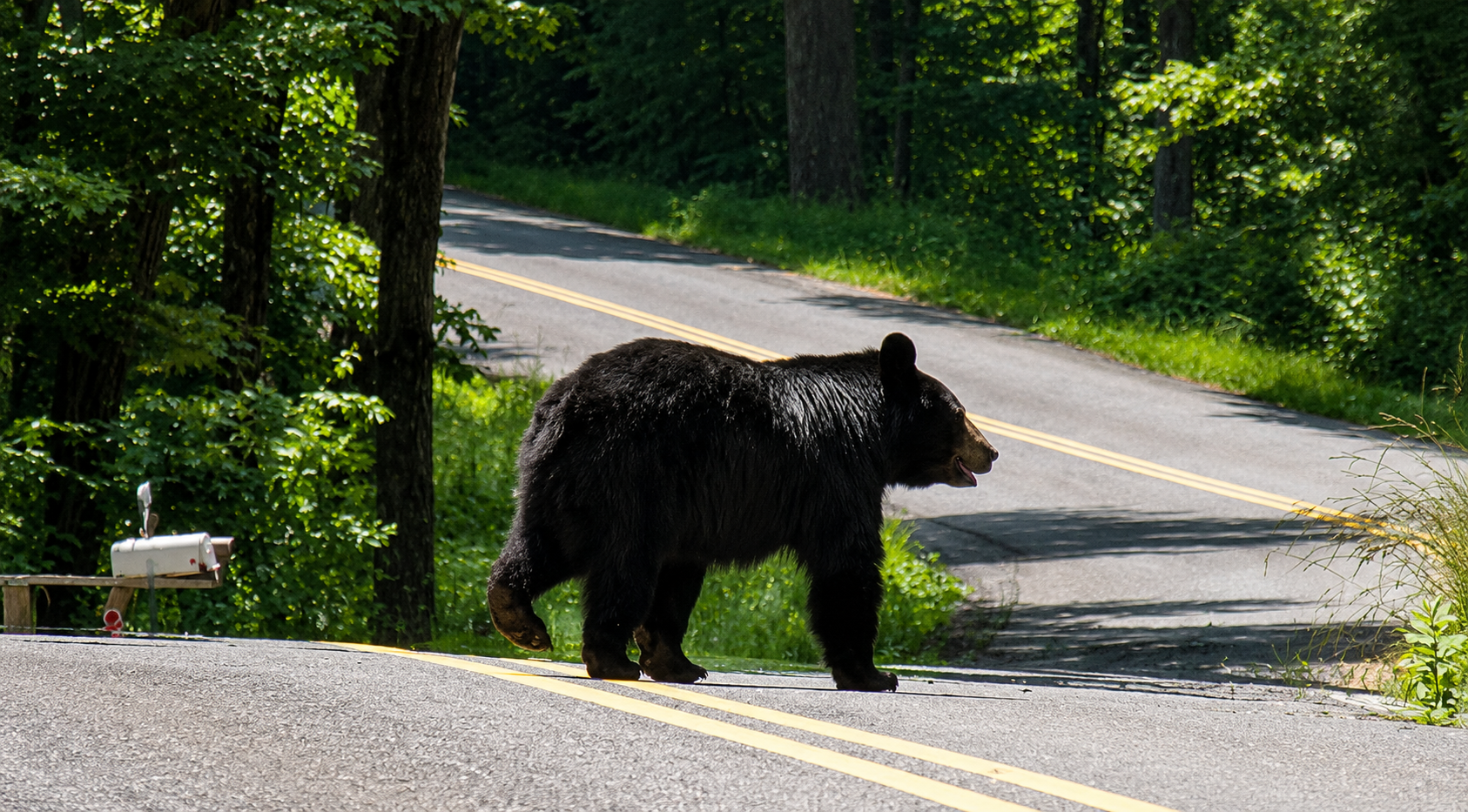
If you spend any real time outdoors in Garrett County — paddling on one of our many, hiking through the hemlocks, or just sitting on a porch at dusk — you’ve probably felt it: the sense that you’re a guest in a much wilder place than the map lets on. Nowhere is that truer than with our black bears.
Garrett County sits at the heart of Maryland’s black bear range, alongside Allegany, Frederick, and Washington counties. Bears have lived in these forests longer than any of our towns have existed, and in many ways, they’re the best measure of how healthy this landscape still is.
Why Black Bears Matter
Black bears aren’t just a photo-op or a “spotted one on the trail cam” story — they’re a keystone piece of the western Maryland ecosystem. As they roam in search of mast — the acorns, hickory nuts, and wild berries produced by our hardwood forests — they disperse seeds, keep other wildlife populations in balance, and act as a living indicator of forest health. Where bears thrive, it generally means the deeper woods — the kind you find around the Wild and Scenic Youghiogheny, Savage Reservoir, Deep Creek Lake and the surrounding wildlands, are doing their job.
They’re also, frankly, a big part of what makes this place feel wild. People travel from cities to experience a landscape where bears, bald eagles, and raptors are still part of daily life. That’s not something to take for granted.
Small Habits, Big Difference: The Trash Can Question
One of the simplest ways Garrett County residents protect bears — and themselves — comes down to something as unglamorous as garbage storage. A wooden or flimsy plastic bin is basically an invitation. A bear’s sense of smell is extraordinary, and once a bear finds an easy meal in an unsecured can, it will keep coming back, and often bring that habit into the next season.
Maryland’s Department of Natural Resources is direct about this: switching to a steel or certified bear-resistant bin, or storing trash in a locked garage or shed until the morning of pickup, is one of the most effective tools we have. Rinsing containers out with ammonia to cut down on food odor helps too. It sounds small, but it’s the difference between a bear that stays wild and cautious, and one that starts treating a neighborhood like a buffet — which is when bears get labeled a “nuisance” and things go badly for them.
A few other easy habits DNR recommends for anyone living in bear country:
- Take down bird feeders from April through November— birds have plenty of natural food during warmer months anyway
- Store pet food indoors, and don’t leave bowls out overnight
- Keep grills clean of grease and food residue, and store them inside when possible
None of this is complicated. It’s just a matter of building it into the rhythm of living here, the same way people in Garrett County already know to check for ice on the roads or watch for deer at dusk.
Remembering How Lucky We Are
It’s easy to forget, especially for those of us who grew up around it, that living alongside black bears is genuinely rare. Most of the country doesn’t have this. As development pushes further into western Maryland — new construction, more visitors, more roads cutting through what used to be unbroken forest — bear habitat keeps shrinking, and the margin for coexistence gets thinner every year.
That makes it even more important that we don’t take the easy way out when a bear shows up in the yard. A bear wandering through isn’t a crisis — it’s a reminder of exactly where we live. DNR wildlife officials have said it plainly: black bears are naturally timid, generally docile, and want nothing to do with confrontation. The best response to an encounter is simple — give it space, make some noise if needed to encourage it to move along, and let it go about its business.
Living Symbiotically
The relationship between people and bears in Garrett County isn’t something that happens on its own — it takes intention. Bears keep our forests balanced. We, in turn, owe them a landscape where they can stay wild, stay fed on natural food sources, and stay clear of the habits that lead to conflict. That’s the whole idea behind a bear-resistant trash can, a stored bird feeder, or a grill wiped down before bed: small, doable actions that let both sides keep living the way they’re supposed to.
At All Earth Eco Tours, this is part of why we do what we do. Every kayak tour across the Savage River Reservoir — one of the wildest, most undeveloped waters in the region, with no motorboats to disturb it — every Adventures with Raptors program at the Friendsville Town Park, and every guided nature tour and foraging experience we lead is a chance to help people fall back in love with this landscape and understand what it actually takes to keep it wild for the next generation. You can see all of our programs at allearthtours.com.
Learn More
- All Earth Eco Tours— book a kayak tour, Adventures with Raptors program, Yoga to You, Soundbath or a guided nature tour
- Maryland DNR: Living with Black Bears
- Maryland DNR: Black Bear Country (Garrett, Allegany, Washington & Frederick Counties)
- Maryland DNR News: As Black Bears Emerge from Winter Dens, Residents Can Help Keep Them Wild
- Maryland DNR News: Maryland’s Black Bears More Active in Fall
- org— additional tips for coexisting with black bears