


Picture a cool autumn morning in Maryland. The leaves are beginning to change, the air feels crisp, and a bird suddenly moves through the treetops before disappearing from view. For a moment, the forest seems completely still again.
That brief encounter is part of the magic of the bird migration season in Maryland.
Every fall, birds move south toward their wintering grounds, while other species arrive from farther north. Maryland sits along the Atlantic Flyway, making the state an important place for birds traveling between breeding and wintering areas. Some stay for the season, while others stop only briefly before continuing their journey.
For birdwatchers, fall is a season of movement, changing habitats, and unexpected sightings.
Key Takeaways
- Fall migration brings songbirds, raptors, waterfowl, shorebirds, and other travelers through Maryland.
- September, October, and November offer different birdwatching opportunities.
- Garrett County and Western Maryland provide forests, wetlands, fields, and mountain habitats worth exploring.
- Patience, binoculars, quiet observation, and good habitat awareness can make birdwatching more rewarding.
What Is Bird Migration Season in Maryland?
Bird migration season in Maryland is the period when birds move between seasonal breeding and wintering areas, with many species traveling south through the state during fall.
Maryland is especially interesting because it can host resident birds, seasonal visitors, and birds that are simply passing through. Some migrants may remain visible for a while, while others can appear and disappear quickly.
That variety is what makes fall birdwatching so exciting.
A trail that seems quiet one morning may feel completely different after a weather change. A group of sparrows may appear in thick vegetation. A hawk may circle above an open field. Waterfowl may gather around suitable wetlands as temperatures change.
The best approach is not to expect a particular bird every time. Instead, birdwatchers can learn to notice habitat, behavior, movement, and sound.
When Is the Best Time for Fall Birdwatching?
Fall migration does not happen all at once.
According to the Birder’s Guide to Maryland and DC, September is an important period for migrating warblers. October brings strong raptor activity, while waterfowl become increasingly noticeable by November. Late-migrating sparrows also become part of the fall landscape.
This creates a simple seasonal pattern:
| Time | What to Watch For | Simple Cue | Common Mistake |
| September | Warblers and songbirds | Look and listen in trees | Expecting summer plumage |
| October | Hawks and other raptors | Watch open skies and ridges | Looking only at ground level |
| November | Waterfowl and sparrows | Check wetlands and brush | Assuming migration is finished |
Weather can also influence what birdwatchers see. Migration is dynamic, so conditions can affect when birds move and where they stop.
Birds to See in Maryland in Fall
The fall bird species Maryland visitors encounter can vary by location and timing. Still, several groups are especially interesting during autumn.
Warblers and Other Songbirds
Warblers are among the birds that make fall migration exciting. September can be particularly rewarding for people searching through trees and shrubs for these small, active birds.
Maryland’s migratory songbirds can include warblers, vireos, thrushes, swallows, and other species moving through the state. Some may be difficult to identify because fall plumage can look different from the bright breeding colors seen earlier in the year.
This is where patience becomes more useful than speed.
Instead of trying to identify every bird immediately, beginners can first notice its size, shape, movement, habitat, and call.
Hawks and Other Birds of Prey
Fall is also an excellent time to look upward.
Raptor migration becomes especially noticeable in October. Maryland’s fall skies can offer opportunities to see Broad-winged Hawks, Bald Eagles, Ospreys, Sharp-shinned Hawks, Cooper’s Hawks, and other raptors. Maryland Department of Natural Resources guidance also highlights September through November as an important period for fall hawk watching.
Mountain ridges and open areas can be particularly useful for watching soaring birds.
A good raptor-watching habit is simple: pause frequently and scan the sky. A bird may be almost invisible against the distance until its wings catch the light.
Sparrows
Sparrows may not always receive the same attention as hawks or colorful warblers, but fall is an excellent season to notice them.
Late-migrating sparrows arrive as autumn progresses, and some species can remain into winter. The White-throated Sparrow, for example, moves into Maryland from northern areas during late October and can also occur in Garrett County.
Look around brush, woodland edges, thickets, and areas where vegetation provides cover.
Waterfowl
As fall develops, waterfowl become increasingly important to Maryland birdwatchers. The Birder’s Guide notes that by November, waterfowl begin arriving in larger numbers around marshes and coastal waters.
Western Maryland offers different habitats, but wetlands and ponds can still provide interesting opportunities.
In Garrett County, Cunningham Swamp Wildlife Management Area contains wetland, field, and forest habitats. Maryland DNR notes that Wood Ducks and Canada Geese use the area, while migrating songbirds can also be found there.
Why Western Maryland Is Worth Exploring
Birdwatching in Western Maryland offers something different from coastal birding.
Garrett County’s forests, wetlands, fields, and mountain landscapes create a variety of habitats. That means a short walk can provide several opportunities to observe different types of birds.
Areas around Deep Creek Lake also offer access to diverse natural surroundings, making Deep Creek Lake birdwatching an appealing part of a broader fall outdoor experience.
The key is to match the habitat with the bird.
Wooded areas can reward observers searching for songbirds. Open spaces can make raptors easier to spot. Wetlands may attract waterfowl and other species.
This habitat-first approach is one of the simplest bird identification tips beginners can learn.
A Simple Framework for Better Birdwatching
A useful approach is the STOP framework:
- S – Stand still: Give birds time to appear.
- T – Track the habitat: Notice trees, shrubs, fields, water, and open sky.
- O – Observe behavior: Watch how the bird moves, feeds, flies, or calls.
- P – Photograph or record carefully: Use binoculars, a camera, or notes without disturbing wildlife.
The framework works because birdwatching is often more about observation than chasing sightings.
Someone walking quickly down a trail may pass several birds without noticing them. Someone who pauses near a woodland edge may see far more.
Birdwatching Tips for Beginners
Beginners do not need complicated equipment.
A pair of binoculars, comfortable outdoor clothing, and a simple bird guide can provide a strong starting point. A phone can also help record observations, though it should not replace watching the bird itself.
Early mornings are often enjoyable because the outdoors can be quieter and birds may be active.
It also helps to carry a notebook. Instead of writing only the species name, record what was actually observed:
- Where was the bird?
- What did it look like?
- Was it alone or with other birds?
- What was it doing?
- What did its call sound like?
These details can make later identification much easier.
For exact timing by species, birdwatchers can also use current migration and bird occurrence tools. The University of Maryland Extension recommends resources such as BirdCast and interactive migration maps to help people understand what birds are moving through their area.
Do This, Not That
Do: Slow down near habitat edges.
Not: Walk quickly while looking only at the trail.
Do: Keep a respectful distance.
Not: Approach birds for a closer photograph.
Do: Use binoculars to observe behavior.
Not: Rely on a photograph alone for identification.
Do: Expect variety.
Not: Assume a particular species will appear.
Do: Leave natural habitat undisturbed.
Not: Remove plants, nests, feathers, or other wildlife materials.
Responsible observation matters because migratory birds depend on safe habitat throughout their annual journeys. Conservation resources emphasize the importance of protecting stopover and nonbreeding habitat, not just breeding areas.
A Realistic Fall Birdwatching Example
Imagine a family visiting Garrett County on a cool October morning.
They begin with the expectation of seeing a hawk. After several quiet minutes, nothing appears.
Instead of leaving, they stop near a forest edge. Small birds move through the vegetation. A few minutes later, something large circles above the open landscape.
The family may not identify every bird perfectly. That does not make the outing unsuccessful.
They have learned something more valuable: birdwatching rewards attention.
That lesson can turn a simple hike into a deeper connection with the landscape.
How to Help Migrating Birds
Birdwatching does not have to end when the binoculars are put away.
People can also make their homes and communities more welcoming to migratory birds. The University of Maryland Extension recommends reducing artificial light at night, keeping cats indoors or supervised, and planting native vegetation that provides food and habitat.
These small choices can support birds during their journeys.
They also remind people that migration is not simply something happening in the sky. It is connected to forests, gardens, wetlands, insects, water, and the places birds use to rest along the way.
Exploring Maryland’s Fall Migration
For visitors interested in nature activities in Garrett County, fall migration provides a reason to slow down and explore familiar landscapes differently.
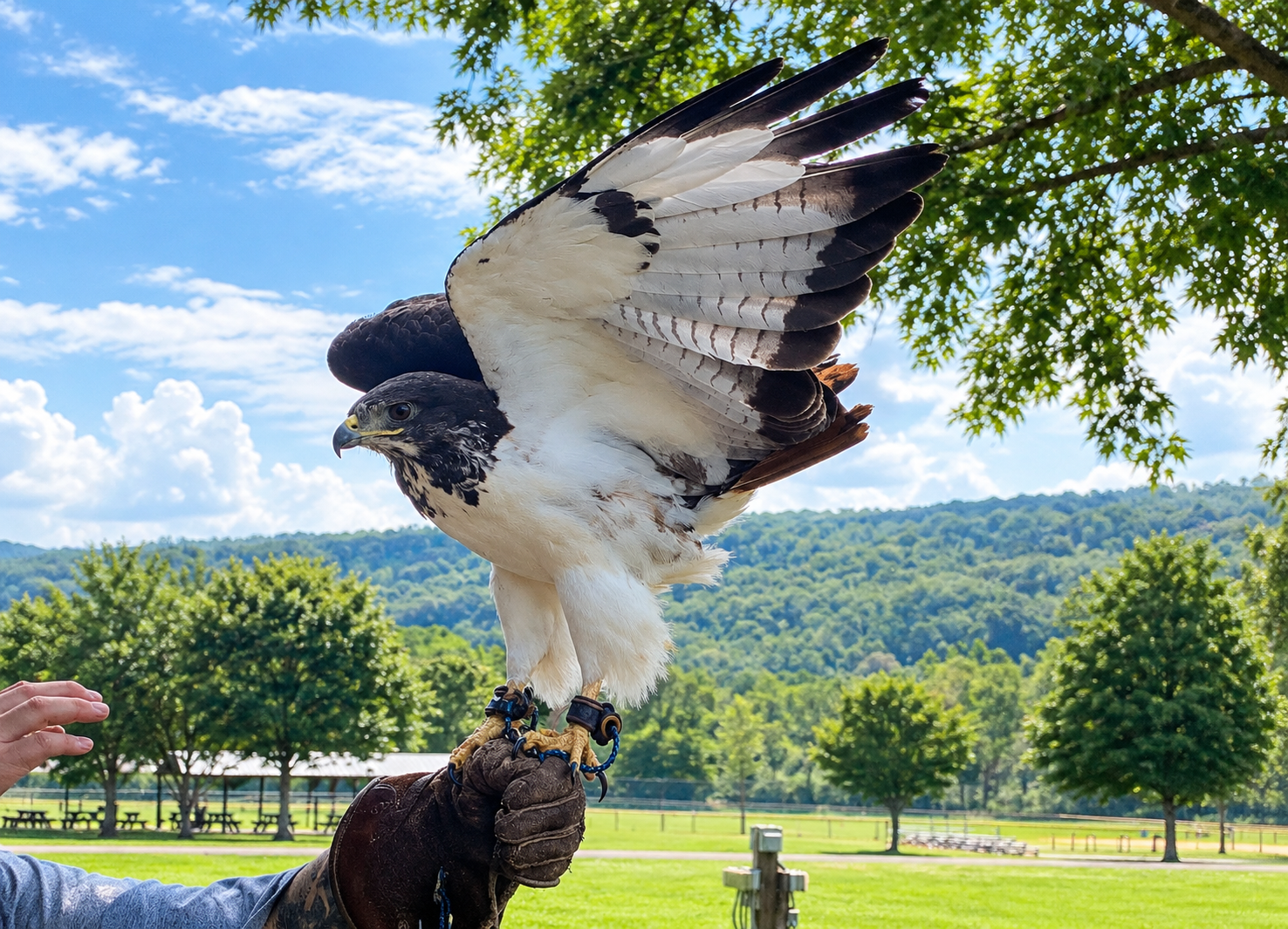
A guided experience can also add educational context to an outdoor outing. All Earth Eco Tours, LLC offers nature-based experiences that include a Birds of Prey Program and guided hiking, providing opportunities to learn more about wildlife and local ecosystems.
The Birds of Prey Program at Deep Creek Lake can be especially relevant for visitors fascinated by raptors and their role in the natural world. Likewise, guided hike tours near Deep Creek Lake can provide an opportunity to experience the area’s outdoor environment while paying closer attention to wildlife.
Sightings, however, are never guaranteed. Weather, migration timing, habitat conditions, and natural bird behavior all influence what appears during an outing.
For information about available experiences, readers can visit All Earth Eco Tours, LLC or call 301-746-4083.
Frequently Asked Questions
When is fall bird migration in Maryland?
Fall migration occurs over several months. September is notable for warblers, October is strong for raptor watching, and November brings increased waterfowl activity and late-migrating sparrows.
What birds can people see during fall migration?
Possible sightings include warblers, sparrows, thrushes, vireos, hawks, eagles, Ospreys, waterfowl, and other migrating birds. The exact species depends on location, habitat, weather, and timing.
Is Garrett County good for birdwatching?
Yes. Garrett County contains forests, wetlands, fields, and other habitats that support a variety of birds. Cunningham Swamp, for example, provides wetland and forest habitat used by waterfowl and migrating songbirds.
What should beginners bring birdwatching?
Binoculars, comfortable clothing, water, a field guide or identification app, and a notebook are useful. A camera can also help document sightings.
Can guided outdoor experiences guarantee bird sightings?
No. Wildlife sightings cannot be guaranteed. A guided experience can provide education, local knowledge, and better opportunities to observe nature, but birds remain wild animals whose behavior changes with conditions.
Conclusion
The bird migration season in Maryland turns autumn into a moving landscape. Birds pass through forests, wetlands, fields, and open skies on journeys that connect Maryland with habitats far beyond the state.
For birdwatchers, the reward is not simply checking species off a list. It is learning to notice what is happening around them. A quiet forest, a flock crossing the sky, or a sparrow moving through fallen leaves can make an ordinary fall morning memorable.
For those exploring Garrett County and Western Maryland, migration offers another reason to step outside, slow down, and experience the natural world with curiosity.