


A quiet trail can change in an instant.
One moment, a hiker hears only wind moving through the trees. Then a white-tailed deer steps into view. A bird circles above the forest. Near the water, a great blue heron stands perfectly still.
That is the appeal of Wildlife Watching at Deep Creek Lake. The experience is not about checking animals off a list. It is about slowing down enough to notice what is already happening around you.
Surrounded by forests, wetlands, streams, and mountain habitats, the Deep Creek Lake region supports a wide range of wildlife. Visitors may encounter deer, wild turkeys, river otters, black bears, bobcats, coyotes, waterfowl, birds of prey, reptiles, amphibians, and many smaller woodland species.
Key Takeaways
- Deep Creek Lake’s forests and waterways support diverse wildlife.
- Deer, turkeys, birds, and smaller woodland animals may be easier to notice than rare predators.
- Black bears and other large mammals require extra distance and respect.
- Responsible wildlife watching means observing without feeding, approaching, or disturbing animals.
What Makes Wildlife Watching at Deep Creek Lake Special?
Wildlife watching is simply the practice of observing animals in their natural surroundings without disturbing them.
At Deep Creek Lake, that setting changes from forest to shoreline, wetland, meadow, and stream. Each habitat creates different opportunities for observation.
The lake itself supports aquatic life and wetland habitat. Maryland’s Department of Natural Resources notes that aquatic vegetation provides food and shelter for waterfowl, turtles, amphibians, and other animals. It also creates foraging areas for species such as otters and muskrats.
The surrounding forests add another layer. Mature hardwoods provide habitat for many forest animals, while connected natural areas can support species that need larger territories.
This variety is what makes wildlife in Deep Creek Lake Maryland so interesting. A walk beside the water can feel completely different from a quiet forest trail.
Animals You May Spot Around Deep Creek Lake
White-Tailed Deer
White-tailed deer are among the most familiar animals in the area.
They may appear along forest edges, meadows, and quieter sections of trails. A deer can disappear quickly, so sudden movement is often a clue to watch more carefully.
For visitors interested in wildlife spotting in Garrett County, deer are a good reminder that common animals can still create memorable encounters.
The best approach is simple. Slow down, scan the edges of the woods, and listen before moving forward.
Wild Turkeys
Wild turkeys are another species associated with the region’s forests.
They may be seen moving through wooded areas or open spaces. Their size makes them easier to notice than many smaller birds, but they can still vanish into vegetation surprisingly quickly.
Maryland’s Deep Creek watershed experienced the return of wild turkeys as forests matured and wildlife habitats recovered.
Black Bears
Black bears are one of the most exciting animals visitors may think about when exploring Maryland’s mountains.
Garrett County is black bear country, and the Deep Creek Lake area contains suitable bear habitat.
However, seeing a bear should never become a goal that encourages someone to get closer.
A bear is a wild animal, not a photo opportunity. If one appears, visitors should give it plenty of space and follow established bear-safety guidance.
The safest wildlife encounter is one where both the person and animal can continue on their way undisturbed.
River Otters
River otters add a special connection between the area’s forests and waterways.
Maryland’s Department of Natural Resources reports that river otters were reintroduced to Garrett County in the 1980s and now reside in Deep Creek Lake.
They can be difficult to spot because they move quickly and spend much of their time around water.
A patient observer near suitable waterways may notice movement, ripples, or an animal briefly surfacing.
Bobcats and Coyotes
Bobcats and coyotes are more elusive than deer or turkeys.
Both are part of the wider wildlife community around Garrett County. The Deep Creek watershed provides forest habitat and movement corridors that can support wide-ranging animals such as black bears and bobcats.
A sighting is never guaranteed. In fact, not seeing these animals is often part of what makes wildlife observation exciting.
Their tracks, sounds, or brief movement through vegetation may be the only evidence that they were nearby.
Birds of Prey and Other Birds
Birdwatchers have plenty to watch for around Deep Creek Lake.
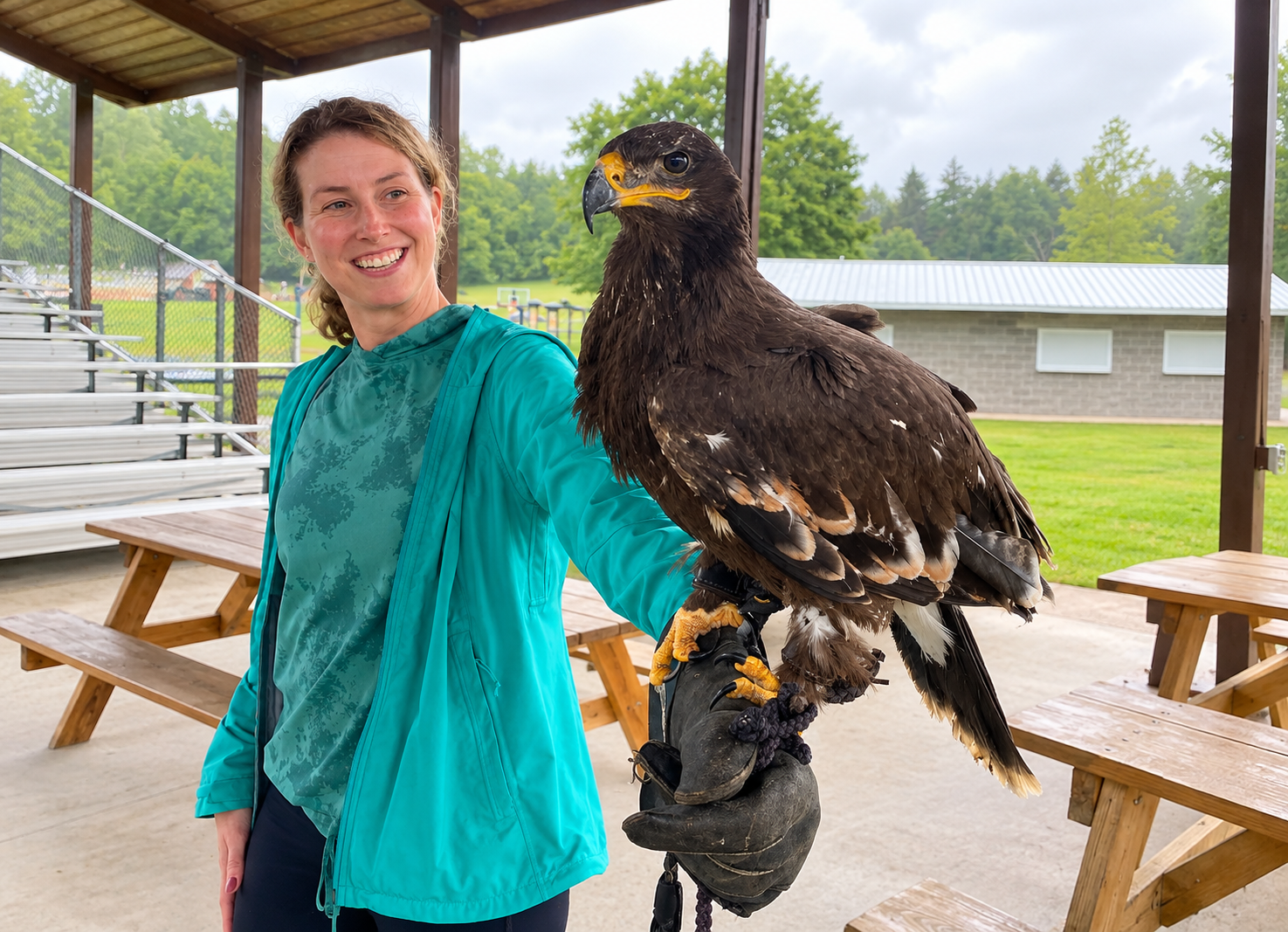
Bald eagles, hawks, owls, turkey vultures, herons, and other birds are associated with the area’s varied habitats. The Deep Creek Lake State Park Discovery Center also provides educational opportunities involving native birds of prey.
The shoreline can be especially interesting for birdwatching because water attracts different species than the surrounding forest.
Visitors should also listen for birds rather than relying only on sight. A call from somewhere above the trail can reveal a bird hidden among branches.
A Simple Wildlife-Watching Framework
Successful Wildlife Watching at Deep Creek Lake does not require expensive equipment.
It requires patience and awareness.
A simple four-step approach can help:
- Pause: Stop frequently instead of walking continuously.
- Scan: Look across the trail, forest edges, water, and sky.
- Listen: Pay attention to calls, rustling leaves, splashing, and movement.
- Respect: Keep your distance and allow wildlife to behave naturally.
This approach works for beginners because it turns an ordinary hike into an observation exercise.
It also helps prevent a common mistake: walking too quickly and expecting wildlife to appear on demand.
Where Should Visitors Look?
Different habitats offer different possibilities.
| Habitat | What to Watch For | Simple Cue | Common Mistake |
| Forest edges | Deer, turkeys, foxes, birds | Scan open areas | Walking too quickly |
| Shoreline | Herons, waterfowl, otters | Watch quietly near water | Getting too close |
| Forest canopy | Hawks, owls, songbirds | Look and listen upward | Focusing only on the trail |
| Meadows | Deer, turkeys, smaller birds | Watch the edges | Making sudden movements |
| Wetlands and streams | Amphibians, turtles, water birds | Look for movement and ripples | Disturbing habitat |
The broader Garrett County region also includes other natural areas where visitors may encounter mountain wildlife. Deep Creek Lake State Park and nearby forested landscapes offer opportunities to observe animals in different settings.
The important point is that wildlife does not follow a visitor’s itinerary. An animal may be visible one day and completely absent the next.
When Is the Best Time for Wildlife Watching?
There is no single perfect time for every species.
Early mornings and quieter periods can be rewarding because fewer people are moving through the landscape. Evening can also bring changes in animal activity.
Season matters, too.
Spring and summer can bring increased bird activity, amphibians, insects, and lush vegetation. Autumn can make forest movement easier to notice as leaves change. Winter can provide different clues, including tracks and other wildlife signs in suitable conditions.
For beginners, the best time is often simply when they can slow down and pay attention.
Wildlife Watching Is Not the Same as Wildlife Chasing
One common misconception is that successful wildlife viewing means getting close.
It does not.
The goal is observation, not interaction.
Feeding wildlife can create problems for both animals and people. Approaching an animal can cause stress or change its natural behavior. Trying to attract an animal for a photograph can also turn a responsible experience into a harmful one.
The same principle applies to wildlife photography at Deep Creek Lake. A good photograph is never worth disturbing an animal.
Visitors should also respect trails, protected habitats, private property, and local regulations.
A Realistic Example
Imagine a family walking a forest trail on a quiet morning.
The children are looking for a bear because that sounds exciting. Instead, they notice tracks, hear a bird calling, and spot a deer near the edge of the woods.
At first, they may feel disappointed.
Then the experience changes.
They begin looking for movement instead of one specific animal. They notice different sounds and start paying attention to the forest floor.
That is often the real lesson of nature watching.
The most memorable encounter is not always the rarest one. Sometimes it is simply the moment when someone learns how to notice.
Do This, Not That
Do:
- Keep a comfortable distance from animals.
- Use quiet voices near wildlife.
- Observe tracks, calls, and other wildlife signs.
- Carry binoculars when appropriate.
- Follow trail and park rules.
- Leave animals and habitats undisturbed.
Not:
- Feed wildlife.
- Chase an animal for a photograph.
- Approach a black bear.
- Block an animal’s escape route.
- Enter restricted or protected areas.
- Assume a sighting is guaranteed.
Wildlife watching also does not require every type of outdoor activity. For example, visitors searching online for guided kayak tours in Garrett County should understand that water-based recreation and wildlife observation are separate experiences. A quiet trail can offer just as many opportunities to notice nature.
Turning a Hike Into a Learning Experience
A guided hike near Deep Creek Lake can add another dimension for visitors who want to understand what they are seeing.
Instead of simply passing a tree, stream, or animal track, a knowledgeable guide can help connect those details to the surrounding ecosystem.
That can make a major difference for beginners.
A footprint becomes evidence. A bird call becomes a clue. A particular tree becomes part of an animal’s habitat.
For those seeking guided outdoor and nature experiences, All Earth Eco Tours, LLC can help visitors explore the area’s natural surroundings with an emphasis on learning, responsible recreation, and appreciation of local habitats.
Frequently Asked Questions
What animals can visitors see around Deep Creek Lake?
Visitors may encounter white-tailed deer, wild turkeys, river otters, black bears, coyotes, bobcats, birds of prey, waterfowl, turtles, amphibians, and smaller woodland animals. Sightings vary by habitat, season, weather, and animal activity.
Are black bears common around Deep Creek Lake?
Black bears are part of the area’s wildlife community, and Garrett County contains suitable bear habitat. However, visitors should never assume they will see one. Any bear encounter should be handled with caution and plenty of distance.
What is the best way to watch wildlife safely?
Stay on appropriate trails, remain quiet, keep your distance, and never feed or approach wildlife. Binoculars can help visitors observe animals without getting closer.
Can beginners enjoy wildlife watching?
Absolutely. Wildlife watching does not require advanced knowledge. Beginners can start by noticing common animals, bird calls, tracks, movement, and changes in the landscape.
Can a guided outdoor experience help with wildlife observation?
Yes. A knowledgeable guide can help visitors recognize habitats, wildlife signs, and appropriate observation practices. However, no responsible tour can guarantee that a particular animal will appear.
Conclusion
Wildlife Watching at Deep Creek Lake is ultimately about paying attention.
The region’s forests, waterways, wetlands, and mountain landscapes create opportunities to see everything from familiar deer and turkeys to elusive otters, bobcats, and black bears.
The best wildlife experience is not about getting the closest photograph or seeing the rarest animal. It is about giving nature enough space to remain wild.
With patience, quiet observation, and responsible habits, visitors can discover that Maryland’s mountains have much more to reveal than scenic views.