
Celebrating Black History Month: The Remarkable Legacy of Maryland’s African American Community
Introduction: Maryland’s Pivotal Role in African American History
Maryland stands as hallowed ground in the story of African American history. From the shores of the Chesapeake Bay to the streets of Baltimore, the Free State has been home to some of the nation’s most influential Black leaders, activists, and innovators. This Black History Month, we honor the extraordinary contributions of Maryland’s African American community, a legacy of resistance, brilliance, and unwavering determination that continues to shape our nation today.
As we explore Maryland’s rich tapestry of Black history, we discover stories of enslaved people who fought for freedom, pioneers who broke barriers, and communities that built lasting institutions despite systemic oppression. Their accomplishments remind us that Black history is American history, and Maryland’s story is incomplete without acknowledging these vital contributions.
The Underground Railroad: Maryland’s Gateway to Freedom
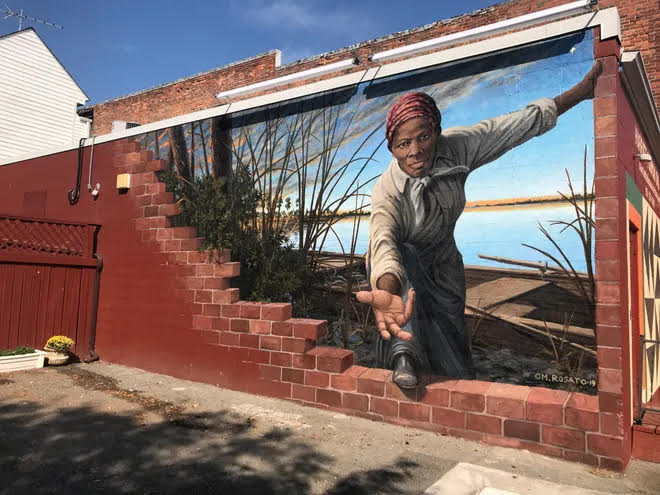
Harriet Tubman: The Moses of Her People
Born around 1822 in Dorchester County, Maryland, Harriet Tubman became one of the most celebrated figures in American history. Known as “Moses,” Tubman was not only a conductor on the Underground Railroad but also an abolitionist, political activist, and Civil War veteran.
Key Accomplishments:
- Conducted 13 missions to rescue approximately 70 enslaved people
- Served as a scout, nurse, and spy for the Union Army during the Civil War
- Never lost a single passenger on her Underground Railroad journeys
- Became one of the most recognized icons of freedom and courage in American history
Today, visitors can explore Tubman’s legacy at the Harriet Tubman Underground Railroad Visitor Center on Maryland’s Eastern Shore, which opened to honor her life and the landscape she navigated to help others reach freedom.
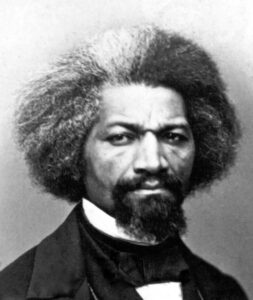
Frederick Douglass: From Maryland Slave to National Leader
Frederick Douglass was born enslaved in Talbot County, Maryland, in 1818. Sent to Baltimore as a young boy, Douglass secretly taught himself to read—a transformative act that would change the course of American history.
Major Achievements:
- Authored three autobiographies, including the bestselling “Narrative of the Life of Frederick Douglass, An American Slave”
- Founded and published several abolitionist newspapers, including “The North Star”
- First African American nominated for Vice President of the United States
- Became one of the most influential orators and writers of the 19th century
While working in Baltimore’s Fell’s Point shipyards, Douglass met his future wife, Anna Murray, who helped him escape to freedom. Just before his death, he returned to Baltimore as a prosperous free man and built five houses on Strawberry Alley, which he named Douglass Place. His home in Cedar Hill is now a National Historic Site.
Learn more about Douglass’s Maryland connections at the Frederick Douglass-Isaac Myers Maritime Park Museum in Baltimore.
Scientific Genius: Benjamin Banneker’s Legacy
The Self-Taught Mathematician and Astronomer
Born on November 9, 1731, in Ellicott’s Mills in Baltimore County, Benjamin Banneker stands as one of the most brilliant minds in American scientific history. Despite having little formal education, Banneker became a largely self-taught mathematician, astronomer, almanac writer, surveyor, naturalist, and abolitionist.
Remarkable Contributions:
- Crafted one of the first American-made wooden clocks, which kept accurate time for over 50 years
- Published almanacs containing astronomical calculations, weather predictions, and literary works
- Engaged in famous correspondence with Thomas Jefferson, challenging the notion of Black intellectual inferiority
- Considered by many to be the first African American scientist
The Benjamin Banneker Historical Park & Museum in Catonsville highlights his accomplishments and features programs celebrating African Americans in science and other fields.
Civil Rights Pioneers: Fighting for Equality
Thurgood Marshall: From Baltimore to the Supreme Court
Thurgood Marshall, born and raised in Baltimore, became one of the most influential legal minds of the 20th century. As chief counsel for the NAACP, Marshall argued and won the landmark Brown v. Board of Education case before the Supreme Court in 1954.
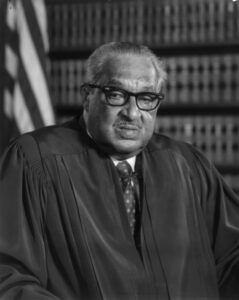
Historic Achievements:
- Successfully argued Brown v. Board of Education, ending legal school segregation
- First African American Supreme Court Justice (appointed 1967)
- Won 29 of 32 cases argued before the Supreme Court
- Baltimore became the first southern city to integrate its schools following Brown v. Board
Baltimore honors Marshall with a statue at the U.S. District Courthouse downtown on Pratt Street. Additionally, Baltimore/Washington International Airport was renamed in his honor and features a tribute to his life and accomplishments in Concourse C.
Lillie Carroll Jackson: Mother of the Civil Rights Movement
Known as “Ma Jackson,” Lillie Carroll Jackson founded the Baltimore branch of the NAACP and earned the title “The Mother of the Civil Rights Movement.” Galvanized by the last recorded lynching in Maryland in 1933, Jackson worked tirelessly for racial justice.
Major Contributions:
- President of the Baltimore NAACP chapter for 35 years
- Won several civil rights cases against segregated public and private institutions, including the University of Maryland
- Orchestrated boycotts, funded Black education, and held voter registration drives
- Worked alongside Thurgood Marshall, Clarence M. Mitchell Jr., and other civil rights legends
The Lillie Carroll Jackson Museum in Baltimore honors her legacy and the broader history of civil rights in Maryland, featuring galleries ranging from personal information about the Jackson family to the earliest freedom fighters like Frederick Douglass.
Breaking Barriers: Trailblazers in Politics and Business
Victorine Quille Adams: Political Pioneer
Victorine Quille Adams was a teacher, civil rights activist, and Maryland’s first Black female state legislator. Her trailblazing efforts began in Baltimore’s segregated public school system.
Key Accomplishments:
- One of five women who chartered the National Council of Negro Women in Baltimore (1943)
- Founded the Colored Women’s Democratic Campaign Committee (1946), encouraging Black women to register to vote and run for office
- First Black woman elected to Maryland’s House of Delegates (1966)
- Later elected to the Baltimore City Council
- Owned a clothing store, the Charm Center, and taught courses on beauty, charm, and self-esteem
William L. Adams: Business Leader and Political Powerbroker
William Lloyd “Willie” Adams moved to Baltimore in 1929 and became a significant figure in Maryland’s Black business community and political landscape.
Notable Achievements:
- Co-founded Parks Sausage Company, one of the first Black-owned businesses to be publicly traded
- Co-owned A&A Development Corporation, focusing on construction and development
- Served as a consultant on the creation of the Maryland State Lottery
- Helped elect Parren Mitchell, the first Black U.S. Representative from Maryland
Enolia Pettigen McMillan: Education and Civil Rights
Born in 1904, Enolia McMillan was an educator, community leader, and civil rights activist who became the first female president of the NAACP.
Major Contributions:
- First female president of the NAACP
- Received a master’s degree from Columbia University
- Authored the thesis “Some Factors Affecting Secondary Education for Negroes in Maryland Counties,” which challenged Maryland’s racist school system
- Inducted into the Maryland Women’s Hall of Fame in 1990
Student Activism: The Morgan State Sit-Ins
In 1955—five years before the famous Greensboro, North Carolina sit-ins—Morgan State University students staged the country’s first successful lunch-counter sit-in when they refused to leave a Read’s Drugstore in Baltimore.
Impact:
- Just days later, Read’s announced that all 39 of its Baltimore-area stores would desegregate
- Demonstrated the power of organized, peaceful protest
- Set a precedent for the civil rights movement that would intensify in the 1960s
The historic counter is now on display in Morgan State University’s student center, along with educational signs detailing how Morgan students contributed to the civil rights movement.
Cultural Preservation: Maryland’s Black History Museums and Sites
Maryland is home to numerous institutions dedicated to preserving and celebrating African American history and culture:
Museums and Cultural Centers
National Great Blacks in Wax Museum (Baltimore)
- Features more than 100 life-sized wax figures of civil rights leaders and cultural icons
- Includes a dramatic walk-through replica of a slave ship and Middle Passage history
- Founded in 1983 by Drs. Elmer and Joanne Martin
Reginald F. Lewis Museum of Maryland African American History & Culture (Baltimore)
- Maryland’s official museum of African American heritage
- Features over 13,000 square feet of exhibition space with approximately 10,000 objects
- Smithsonian affiliate offering exhibitions, film screenings, and living history performances
Banneker-Douglass-Tubman Museum (Annapolis)
- Maryland’s official museum of African American heritage
- Permanent exhibit “Deep Roots, Rising Waters: A Celebration of African Americans in Maryland”
- Documents African American history from 1633 through today
Historic Sites and Memorials
Kunta Kinte-Alex Haley Memorial (Annapolis)
- The only memorial in the United States commemorating the actual name and place of arrival of an enslaved African
- Honors Alex Haley’s efforts to uncover his family history
- Features three installations: a compass rose, sculpture group, and story wall
Frederick Douglass-Isaac Myers Maritime Park Museum (Baltimore)
- Celebrates the contributions of African Americans to the maritime industry
- Hosts educational programs and cultural events
- Recently unveiled Frederick Douglass’s new wax figure
Southern Maryland’s Hidden Histories
The Southern Maryland Equity in History Coalition has worked to document and preserve the stories of Black, Indigenous, and Other People of Color in Southern Maryland, focusing on individuals who exemplified strength and resilience in their everyday lives.
Notable Figures from Southern Maryland
United States Colored Troops (USCT)
- Private William H. Barnes and Sergeant James H. Harris earned the Medal of Honor for gallantry at the Battle of New Market Heights, Virginia
- A monument in St. Mary’s County honors all Union Soldiers and Sailors from the county who served during the Civil War
Albert Cassell
- Famous Black architect who planned Calvert Town, a 500-acre development for African Americans
Simeon Saunders Booker, Jr.
- Civil Rights era reporter and journalist
- First Black reporter for the Washington Post
Baltimore’s Black Arts and Culture District
Covering 147 acres of historic West Baltimore, the state-recognized Black Arts District combines Baltimore’s rich history of African American innovation with contemporary creativity. The district features dining, art, music, and cultural experiences that celebrate Baltimore’s unique Black heritage and contemporary influence.
The Fight Continues: Maryland’s Ongoing Commitment
The Maryland Commission on African American History and Culture (MCAAHC) continues to preserve and advance African American history and culture in Maryland. The commission:
- Administers the African American Heritage Preservation Program (AAHPP), providing $5 million in grants for preservation projects
- Publishes “The Pendulum,” a quarterly newsletter featuring stories of Maryland’s African American heritage
- Organizes statewide book drives and educational programs
- Works to combat book banning and the suppression of African American history
Plan Your Visit: Exploring Maryland’s Black History
Maryland offers numerous opportunities to explore African American history throughout the year:
Eastern Shore
- Harriet Tubman Underground Railroad Visitor Center (Cambridge)
- Harriet Tubman Underground Railroad Byway (driving tour)
Baltimore
- National Great Blacks in Wax Museum
- Reginald F. Lewis Museum
- Lillie Carroll Jackson Museum
- Frederick Douglass-Isaac Myers Maritime Park Museum
- Maryland Historical Society
- Black Arts District
Central Maryland
- Benjamin Banneker Historical Park & Museum (Catonsville)
- Banneker-Douglass-Tubman Museum (Annapolis)
- Kunta Kinte-Alex Haley Memorial (Annapolis)
Southern Maryland
- United States Colored Troops Memorial (St. Mary’s County)
- Riley/Bolton House (Montgomery County)
- Multiple sites on the National Underground Railroad Network to Freedom
Conclusion: Honoring the Past, Building the Future
Maryland’s Black history is a testament to the resilience, creativity, and determination of African Americans who, despite facing brutal oppression and systemic racism, built communities, fought for justice, and achieved extraordinary accomplishments that transformed our nation.
From Harriet Tubman’s daring rescue missions to Benjamin Banneker’s scientific genius, from Thurgood Marshall’s legal victories to the student activists who integrated lunch counters, Maryland’s African American community has consistently led the fight for freedom and equality. Their stories remind us that the pursuit of justice requires courage, perseverance, and unwavering commitment to the principle that all people deserve dignity and equal rights.
This Black History Month, and every month, we must honor these pioneers by learning their stories, visiting the museums and sites that preserve their legacies, and continuing the work they began. Maryland’s Black history is not just a collection of facts and dates; it is a living legacy that calls us to action, challenging each generation to build a more just and equitable society.
As we celebrate the remarkable achievements documented here, let us also recognize that the struggle for equality continues. By understanding our history, we equip ourselves to create a better future, one that honors the sacrifices of those who came before and fulfills the promise of opportunity and justice for all.
Additional Resources
- ACLU of Maryland: 50 Black Heroes From Maryland You Need To Know
- Visit Maryland: Black History Month Events
- Visit Maryland: Discover African-American History
- Visit Baltimore: Experience African American History
- Maryland Commission on African American History and Culture
- Southern Maryland Equity in History Coalition
- St. Mary’s College Library: Maryland’s Black History