


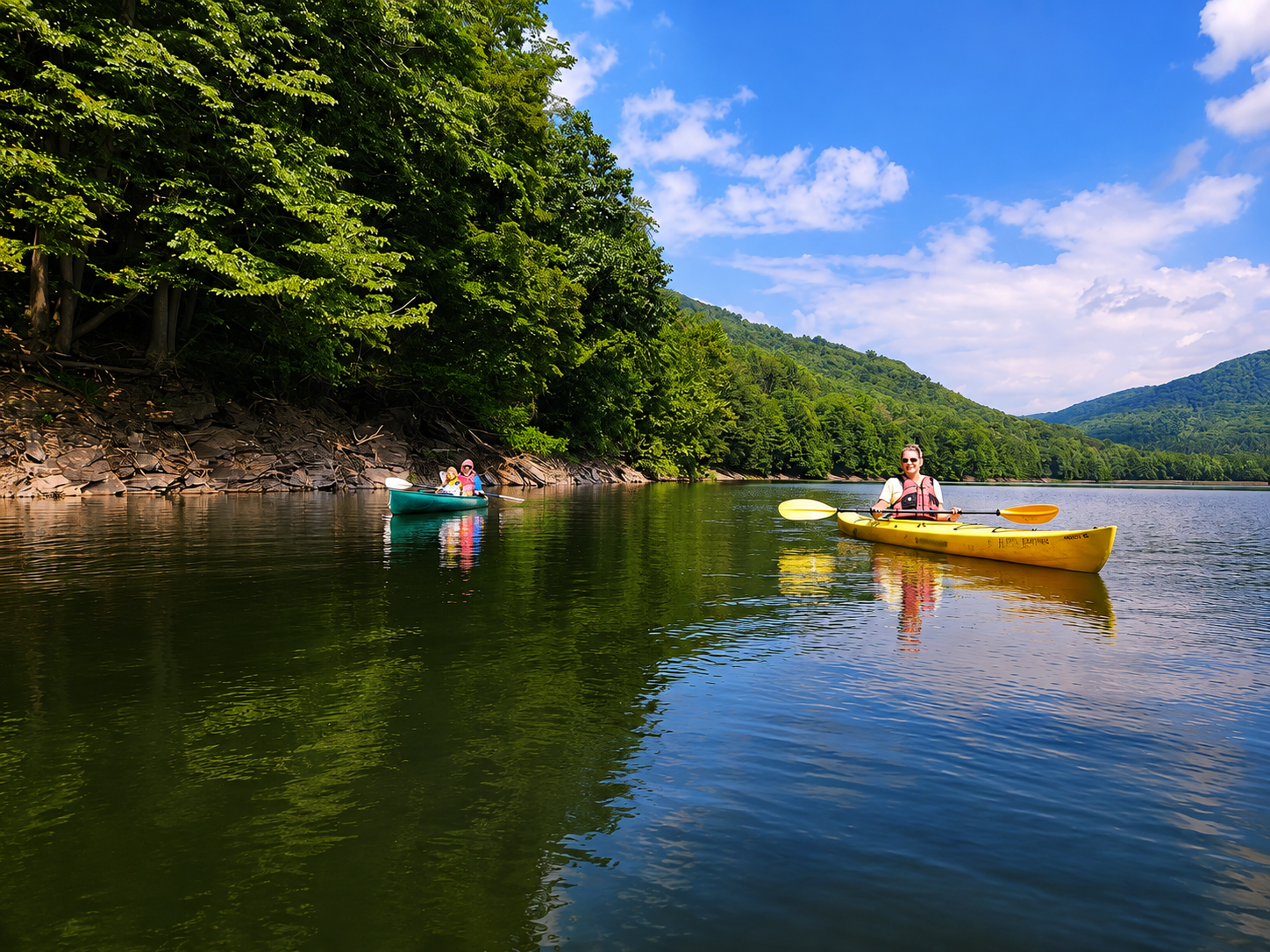
The kayak is ready. The water looks calm. The morning air feels fresh. Then someone realizes the phone is at 8% battery, nobody packed a dry change of clothes, and the sunscreen is still in the car.
A little preparation can prevent those small problems from becoming the story of the day.
For anyone planning Deep Creek Lake kayaking, a smart packing list is less about bringing everything and more about bringing the right things. Weather can change, gear can get wet, and even a relaxed paddle requires basic safety preparation.
This guide covers 10 practical kayaking adventure essentials for beginners, families, couples, and experienced paddlers.
Key Takeaways
- A properly fitted personal flotation device should be part of every kayaking plan.
- Dry storage protects phones, clothing, food, and other important items.
- Quick-dry clothing and appropriate footwear can make the trip much more comfortable.
- Weather, water conditions, and the paddler’s experience should influence what gets packed.
What Should Be Packed for a Kayaking Trip?
A kayaking packing list is a simple checklist of safety equipment, clothing, hydration, communication tools, and personal items needed for a comfortable day on the water.
For a recreational outing, the goal is simple: stay safe, stay comfortable, protect important belongings, and be prepared for changing conditions.
The following 10 items provide a practical starting point.
1. Personal Flotation Device (PFD)
The first item should always be a properly fitted personal flotation device, commonly called a PFD.
A PFD is designed to help keep a person afloat in the water. It should be appropriate for the activity and fit securely without restricting movement.
For beginners, comfort matters because an uncomfortable PFD may tempt someone to loosen or remove it.
A kayaking adventure should never begin with safety equipment treated as an afterthought.
The kayaking guide source used for this article also places a PFD among the essential items for recreational kayaking.
2. Quick-Dry Clothing
Cotton clothing may feel comfortable on land, but kayaking can involve splashes, wet seats, and changing weather.
Quick-dry clothing is a practical choice because it can dry faster after getting wet.
A lightweight shirt, comfortable shorts or pants, and an extra layer can work well for many recreational outings.
The exact clothing should depend on the season and forecast. Colder conditions require more careful planning than a warm summer afternoon.
Avoid packing only for the air temperature. Water exposure can change how quickly a paddler becomes uncomfortable.
3. Water Shoes or Secure Footwear
Bare feet may seem convenient until a paddler needs to step onto a rocky shoreline or uneven surface.
Water shoes or secure footwear can provide protection and better footing.
The important word is secure. Loose footwear can become a nuisance in and around the kayak.
A pair of shoes that can handle getting wet is often more useful than a favorite pair of everyday sneakers.
The kayaking guide source similarly recommends footwear that protects feet while paddling and moving around wet or rocky areas.
4. Dry Bag for Kayaking
Few things ruin a peaceful paddle faster than discovering that a phone, wallet, or spare clothes are soaked.
A dry bag for kayaking provides a simple way to protect items from splashes and moisture.
Important belongings should be stored in a properly closed waterproof or water-resistant container. Smaller bags can also make organization easier.
Useful items to protect include:
- Phone
- Keys
- Wallet
- Extra clothing
- Medication
- Snacks
- Identification
The kayaking guide source recommends smaller, durable dry bags because they can be easier to organize inside a kayak.
5. Waterproof Phone Case or Communication Device
A phone can serve several purposes during an outdoor trip. It may provide communication, navigation, weather information, or a way to document the experience.
But a phone is only useful if it remains protected.
A waterproof phone case adds another layer of protection from splashes. It should not replace good judgment about where and how the phone is stored.
For longer or more remote outings, paddlers may need additional communication and navigation equipment based on the route and conditions.
The key is to have a realistic plan for contacting help if something unexpected happens.
6. Water and Snacks
Paddling may feel relaxed, but it is still physical activity.
Bringing enough drinking water helps prevent the simple mistake of realizing there is nothing to drink halfway through the outing.
Easy-to-pack snacks can also be useful. Good options include foods that are easy to handle and unlikely to create a mess inside the kayak.
Think simple:
- Water
- Fruit
- Trail mix
- Granola bars
- Crackers
- Other familiar snacks
Food and water should be secured so they do not become loose inside the boat.
7. Sun Protection
Water can make sun exposure feel easy to underestimate.
A kayaking gear checklist should therefore include basic sun protection. Sunscreen, sunglasses, and protective clothing can all be useful.
A hat can also provide additional protection, but it should be secure enough to avoid becoming another item floating in the water.
Sunscreen should be reapplied according to its directions, particularly during longer outdoor activities.
The kayaking guide source includes sunscreen and sunglasses among its recommended miscellaneous kayaking items.
8. Extra Clothes
One of the simplest things to bring kayaking is also one of the easiest to forget.
Pack a dry change of clothes.
Even if the forecast looks perfect, splashes can happen. A paddle can drip. A kayak can shift. Someone may need to step into shallow water.
Keeping extra clothing in a protected dry bag gives paddlers a backup plan.
For families, this becomes even more useful. Children often find creative ways to get wet during outdoor adventures.
An extra shirt, pants or shorts, socks, and a lightweight layer can make the ride home much more comfortable.
9. Basic First-Aid and Emergency Items
A small first-aid kit can be useful for minor problems such as small cuts, scrapes, or other everyday outdoor mishaps.
It does not need to become a giant medical bag for a short recreational trip.
Depending on the outing, paddlers may also consider carrying a whistle or another appropriate signaling device.
The right emergency equipment depends on the route, group size, experience level, weather, and distance from assistance.
The kayaking guide source recommends first-aid equipment and multiple ways to signal or communicate during an emergency.
10. Weather-Ready Gear
The final item is not one object. It is a plan for the weather.
Before heading out, paddlers should check the forecast and consider how conditions could affect the trip.
Rain protection, an extra layer, sun protection, or warmer clothing may be appropriate depending on the season.
This is especially important for beginners who may be unfamiliar with how quickly outdoor conditions can become uncomfortable.
A good rule is simple:
Pack for the conditions that could occur, not only the conditions seen at the starting point.
Weather information should come from a reliable local forecast before departure.
A Simple Packing Framework: Protect, Prepare, Perform
A useful way to organize a kayak trip packing list is to divide everything into three groups.
| Practice | When it helps | Simple cue | Common mistake |
| Protect | Keeping belongings dry | Use a dry bag | Leaving electronics loose |
| Prepare | Handling unexpected situations | Carry basic safety gear | Packing only for perfect weather |
| Perform | Staying comfortable while paddling | Dress for conditions | Wearing clothing that stays wet |
This framework makes packing easier because every item has a purpose.
If an item does not protect belongings, prepare the paddler, or improve comfort, it may not need to come along.
A Real-World Example
Imagine a couple arriving for a morning paddle.
The forecast looks mild, so they wear comfortable clothes and bring their phones. They remember water but forget sunscreen and extra clothing.
After an hour, one person gets splashed while adjusting the kayak. The shirt is soaked. The phone is sitting in an open pocket.
Nothing dramatic has happened, but the trip has become uncomfortable.
Now imagine the same outing with a small dry bag, quick-dry clothing, sunscreen, secure footwear, water, snacks, and a basic emergency kit.
The difference is not expensive equipment. It is preparation.
That is the real purpose of a good kayaking packing list.
Deep Creek Lake Kayaking: What Beginners Often Get Wrong
One common misconception is that recreational kayaking requires a huge collection of specialized equipment.
It does not.
The better approach is to match the gear to the activity.
A short, familiar outing does not require the same equipment as a remote overnight expedition. The source material makes this distinction clearly by separating casual day-trip equipment from more advanced sea-kayaking and overnight gear.
Another mistake is focusing entirely on comfort and forgetting safety.
A comfortable shirt is helpful. A properly fitted PFD is essential.
A waterproof phone case is useful. Knowing how to respond if conditions change is more important.
Good preparation balances both.
Do This, Not That
Do this: Check the weather before leaving.
Not that: Assume the morning conditions will remain unchanged.
Do this: Keep phones, keys, and extra clothes protected.
Not that: Leave important belongings in open pockets.
Do this: Wear secure footwear.
Not that: Rely on loose sandals that can easily come off.
Do this: Bring enough water for the outing.
Not that: Assume a short paddle means hydration does not matter.
Do this: Wear a properly fitted PFD.
Not that: Treat a PFD as optional because the water looks calm.
Important Safety Reminder
Kayaking conditions can vary with weather, water conditions, season, route, and paddler experience.
A packing list cannot replace good judgment.
Anyone planning an outing should follow applicable local rules and use appropriate safety equipment. Beginners may benefit from instruction or guidance from qualified professionals, especially when they are unfamiliar with the area or conditions.
For anyone researching Kayaking services near Deep Creek Lake, current availability should always be confirmed directly with the provider before making plans. Services and routes can change.
Frequently Asked Questions
What should beginners bring kayaking?
Beginners should start with a properly fitted PFD, suitable clothing, secure footwear, water, snacks, sun protection, a dry bag, a protected phone, extra clothes, and basic emergency supplies.
What should be kept in a dry bag?
Important items that need protection from water can include phones, keys, wallets, identification, medication, snacks, and spare clothing.
Are water shoes necessary for kayaking?
They are not always required, but secure footwear can help protect the feet and provide better footing around wet or rocky areas.
What should paddlers wear for Deep Creek Lake kayaking?
Clothing should match the season and forecast. Quick-dry clothing is generally practical because paddlers may encounter splashes or wet conditions.
Does All Earth Eco Tours, LLC offer kayaking?
Anyone interested in current outdoor or kayaking-related services should confirm availability, locations, and current offerings directly before booking. This helps ensure the planned experience matches the provider’s current services.
Plan the Adventure Before Leaving the Shore
The best kayaking days often feel effortless.
The paddler launches, settles into a comfortable rhythm, notices the scenery, and enjoys the quiet movement of the water.
That sense of ease usually begins before the kayak ever touches the water.
A thoughtful packing list removes small problems before they happen. It keeps important belongings protected, helps paddlers stay comfortable, and provides basic preparation for unexpected situations.
For visitors exploring Garrett County and planning an outdoor adventure, preparation is part of the experience. Before booking or setting out, conditions, equipment, route details, and current service availability should always be confirmed.
For questions about currently available outdoor experiences, contact All Earth Eco Tours, LLC at 301-746-4083 or carol@allearthtours.com.