


A grounded guide for curious walkers, families, and Deep Creek Lake visitors
The trail looks simple until someone asks, “Can we use that plant?”
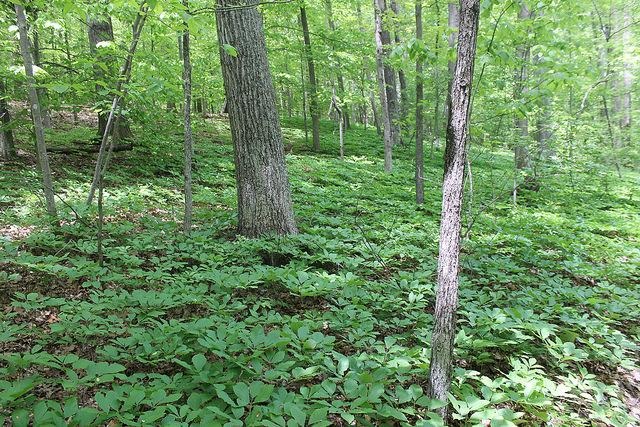
Maybe it happens beside a damp patch of jewelweed. Maybe it happens when mayapple leaves spread across the forest floor like little green umbrellas. Maybe you are walking near Deep Creek Lake, trying to enjoy a quiet afternoon, and suddenly the woods feel full of questions.
That is the pull of medicinal plants in Maryland. They are beautiful, useful to wildlife, tied to traditional knowledge, and often misunderstood.
The hard part is knowing what to admire, what to learn, what to leave alone, and when to ask for help.
Key Takeaways
- Maryland has many native and naturalized plants with traditional-use histories.
- Plant identification and safety matter more than quick foraging tips.
- Western Maryland is a rich place to learn because of its mountain forests and Appalachian plant traditions.
- Guided nature walks are best for beginners who want to learn without taking risks.
What Are Medicinal Plants in Maryland?
Medicinal plants are plants that have been used in traditional healing systems, studied for helpful natural compounds, or valued for cultural and historical reasons.
That does not mean every plant is safe to touch, taste, harvest, brew, or use at home.
Medicinal plants in Maryland may include woodland herbs, shrubs, wildflowers, and trees found across Garrett County, the Appalachian region, the Chesapeake Bay watershed, and other parts of the state. Some are common. Some are rare. Some have toxic parts. Some are protected.
Modern plant research often looks at natural compounds such as flavonoids, alkaloids, terpenoids, tannins, and saponins. Those words sound technical, but the idea is simple: plants make chemical compounds that can affect living systems.
Still, “affect” does not always mean “safe.” That is where many people get into trouble.
Why This Topic Matters Near Deep Creek Lake
If you are visiting Deep Creek Lake, Garrett County, or Western Maryland, you are in a landscape where plant life changes with elevation, moisture, shade, and season.
A spring walk may bring bloodroot, trout lily, trillium, violets, skunk cabbage, and mayapple. Summer adds more aromatic plants, sunny meadow flowers, and lush streamside growth. Fall makes berries, bark, seeds, and leaf patterns easier to notice.
That variety makes the area a wonderful outdoor classroom.
The Maryland Native Plants Program notes that the Commercial Maryland Native Plants List includes approximately 650 plants native to Maryland’s mountain, Piedmont, and coastal plain regions. That is the only statistic this article needs. It shows why local context matters so much.
A plant that thrives in a Western Maryland woodland may not behave the same way in the Maryland Coastal Plain. A plant that looks familiar in a garden may not be native. A plant with a traditional use may also be sensitive to overharvesting.
The woods have layers. Good plant learning respects them.
Which Maryland Medicinal Plants Might You Notice?
Not every plant on a trail should be called “medicine.” A better way to think about it is this: some Maryland plants have traditional uses, some have modern research interest, and some are best understood as part of local ecology.
Here are a few plants people often ask about on Maryland plant walks.
| Plant | Where you may notice it | Traditional-use context | Safety and learning note |
| Jewelweed | Moist stream edges and damp trails | Often discussed in folk traditions for skin contact after outdoor irritation | Learn its habitat and flower shape, but do not treat it as a guaranteed remedy |
| Witch hazel | Woodland edges and understory areas | Long history of topical use from bark and leaves | Good plant for learning winter flowers and shrub ID |
| Wild bergamot | Sunny openings and meadow edges | Aromatic mint-family plant with traditional tea use | Also valuable for pollinators |
| Spicebush | Damp woods and streamside areas | Aromatic twigs and berries used in traditional preparations | Smell gently, but avoid stripping branches |
| Wild ginger | Rich shaded woods | Known in traditional plant knowledge | Not the same as grocery-store ginger |
| Bloodroot | Spring woodland floors | Historically known, but can be irritating or toxic | Admire and leave alone |
| Mayapple | Spring woodland colonies | Has traditional-use history, but plant parts can be toxic | A strong “do not nibble” teaching plant |
| American ginseng | Mature hardwood forests | Highly valued in herbal trade | Regulated and vulnerable to overharvesting |
For local plant verification, the Maryland Plant Atlas is a strong resource because it provides distribution information for Maryland’s native and naturalized plants. For sensitive species, the Maryland Biodiversity Project is also useful. For example, goldenseal is listed there as threatened in Maryland.
What Do Most Beginners Get Wrong?
Most people do not make mistakes because they are careless. They make mistakes because plants are complicated.
The biggest mistake is assuming a plant is safe because it is natural.
The second mistake is trusting one clue. Flower color alone is not enough. Leaf shape alone is not enough. A phone app is not enough.
The third mistake is forgetting that a plant has a job before a person gives it a use. It may feed pollinators. It may hold soil. It may be part of a sensitive woodland community. It may be slow to recover if dug or picked.
John Muir wrote, “In every walk with nature one receives far more than he seeks.” That line fits here. A plant walk gives more when you stop trying to take something from it.
How Can You Identify Medicinal Plants Safely?
Start slowly. A safe plant identification habit uses several clues, not one quick guess.
Use this simple field method:
- Look at the whole plant, including leaves, stem, flower, fruit, bark, and growth pattern.
- Notice the habitat, such as wet soil, dry meadow, rocky slope, stream edge, or rich woodland.
- Check the season, because many plants look different in spring, summer, and fall.
- Compare trusted local sources, such as the Maryland Plant Atlas, University of Maryland Extension, or a regional field guide.
- Do not taste or harvest a plant unless a qualified expert has confirmed the identification and the rules allow it.
That last step matters.
Some plants have toxic lookalikes. Some can irritate skin. Some may interact with medicines. The National Center for Complementary and Integrative Health warns that herbs and supplements can cause safety concerns, including interactions with medications.
So yes, curiosity is welcome. Guesswork is not.
Are Maryland Foraging Walks the Same as Herbal Medicine Classes?
No, and this distinction should be clear.
A responsible Maryland foraging walk or plant identification class is usually about observation, ecology, safety, and traditional-use context. It is not a medical visit. It is not a promise that a plant will treat a condition.
That matters for families, beginner foragers, wellness-minded travelers, and outdoor education groups.
On a guided walk, the best lesson may be learning why a plant should not be harvested. American ginseng is a good example. The Maryland Department of Agriculture explains that anyone who collects and harvests ginseng for sale in Maryland must have a valid annual collecting permit.
Even when a law allows harvesting in certain cases, ethical wildcrafting asks a deeper question: should this plant be taken at all?
Often, the better answer is no.
A Better Framework: Notice, Name, Respect
For beginners, the best way to explore herbal plants native to Maryland is to use a simple three-part framework.
Notice
Slow down enough to see details.
Is the plant growing alone or in a colony? Is it near water? Is it flowering? Are insects visiting it? Does it have a square stem like many mint-family plants?
This is where a walk becomes interesting.
Name
Try to identify the plant through multiple clues.
Use common names and scientific names when possible. Wild bergamot is also Monarda fistulosa. Wild ginger is Asarum canadense. American ginseng is Panax quinquefolius.
Scientific names help because common names can shift from place to place.
Respect
Ask what the plant needs before asking what people use it for.
Is it common here? Is it vulnerable? Is it protected? Is it important to wildlife? Could collecting it damage the local population?
That one habit changes the whole tone of a plant walk.
A Real-World Trail Scenario
Picture a family visiting Garrett County for the weekend. They have already done the lake, grabbed lunch, and want something quieter before dinner.
On a shaded trail, someone spots umbrella-shaped mayapple leaves. A child points to a strange flower tucked under the foliage. An adult says, “I heard that plant is medicinal.”
That could become risky fast if the group starts guessing.
With a guide, the moment becomes useful instead. The group learns how mayapple grows, why plant parts can be unsafe, how woodland colonies spread, and why some plants are better left untouched.
No one needs to harvest anything for the walk to matter.
That is the heart of Deep Creek Lake nature walks. The reward is not a basket full of plants. It is a better eye.
Do This, Not That
Do this: Take photos from several angles.
Not that: Pull plants up for identification.
Do this: Learn the plant’s role in the habitat.
Not that: treat the forest like a free herb shelf.
Do this: Ask about safety, laws, and lookalikes.
Not that: trust a single social media post.
Do this: enjoy traditional stories with respect.
Not that: make medical claims from folklore.
Do this: choose guided learning when you are new.
Not that: self-medicate with wild plants.
Where a Guided Walk Fits In
If you are planning a trip near Deep Creek Lake, a guided hike or nature walk can help you enjoy the woods without feeling like you need to know everything first.
This is especially helpful in spring and early summer, when plants appear quickly and trails change from week to week. It is also useful for groups with mixed comfort levels. Some people want plant names. Some want a gentle walk. Some just want their kids to look up from a screen for a while.
A good guide can meet all of that in the middle.
For related outdoor experiences, explore the guided hikes near Deep Creek Lake service page and choose a walk that matches your season, pace, and group.
Important Safety Note
This article is for education and nature appreciation only. It is not medical advice, herbal treatment guidance, or a recommendation to consume wild plants.
Guests should not self-medicate with wild plants. Some medicinal herbs in Maryland have toxic lookalikes, some may be protected by law, and some may interact with medications. Always speak with a qualified healthcare professional before using any plant medicinally.
Never harvest or consume a wild plant unless it has been positively identified by a qualified expert and harvested legally and sustainably.
Conclusion: The Best Plant Walks Teach You to See
Medicinal plants in Maryland are not just a list of leaves, roots, and old remedies. They are part of a living place.
They connect Deep Creek Lake to mountain forests, Garrett County to Appalachian plant traditions, and everyday hikers to a quieter kind of attention.
If you want help choosing a safe, educational outdoor experience, All Earth Eco Tours offers guided hikes, nature walks, foraging-related learning, kayak tours, snowshoeing, wellness programs, farm camp, and other nature-based adventures near Deep Creek Lake. Call 301-746-4083 or email Carol@allearthtours.com to plan the right outing for your group.
Come curious. Walk gently. Leave the woods better than you found them.
FAQ
What medicinal plants grow in Maryland?
Maryland has plants with traditional-use histories such as witch hazel, jewelweed, spicebush, wild bergamot, bloodroot, mayapple, black cohosh, goldenseal, and American ginseng. Some are unsafe or protected, so identification and caution matter.
What are native medicinal plants in Maryland?
Native medicinal plants in Maryland may include witch hazel, wild bergamot, spicebush, wild ginger, jewelweed, black cohosh, and American ginseng, depending on the habitat and region.
Are there wild medicinal plants in Western Maryland?
Yes. Wild medicinal plants in Western Maryland can be found in mountain forests, stream edges, meadows, and shaded woodland areas. Beginners should learn with trusted guides or regional plant resources.
Can you find medicinal plants near Deep Creek Lake?
Yes, medicinal plants near Deep Creek Lake may appear along trails, damp woods, and sunny edges. The safest approach is to observe, photograph, and learn rather than harvest.
How do you identify Maryland plants with traditional uses?
Use several clues: leaf shape, stem, flower, fruit, habitat, season, and trusted local references. Maryland plant identification should never depend on one photo or one app result.
Are there medicinal plants on Maryland hiking trails?
Yes, but plants on Maryland hiking trails should not be picked or tasted. Many natural areas restrict collecting, and some plants have toxic lookalikes.
Can families book a guided nature walk near Deep Creek Lake?
Yes. Families can choose a gentle outdoor learning experience that focuses on local plants, wildlife, seasonal changes, and safe trail exploration.
Does the brand offer a Maryland medicinal plant tour?
The best fit is a guided nature walk or foraging-inspired educational tour. The focus is plant appreciation, identification, ecology, and safety, not medical advice or wild harvesting.