


The lake is quiet. Then it is not. A heron steps from the shoreline grass. A woodpecker drums somewhere beyond the trail. A sharp rattle cuts across the water, and suddenly everyone in the family looks up from their snacks, maps, and phones.
That is the magic of birdwatching around Deep Creek Lake. It does not ask anyone to be an expert. It asks them to slow down long enough to notice what has been happening all around them.
For visitors, families, beginner birdwatchers, photographers, and nature lovers, the Native birds of Deep Creek Lake offer a simple way to understand the wild side of Garrett County. Some birds stay through much of the year. Some become easier to spot in certain seasons. Some appear near open water, while others stay hidden in the forest until a song gives them away.
Bird sightings always depend on season, weather, habitat, migration patterns, and time of day. This guide does not promise every bird on every visit. Instead, it highlights native species commonly associated with Deep Creek Lake, Deep Creek Lake State Park, and the wider Western Maryland landscape.
A helpful place to understand the area’s bird variety is the Avibase checklist for Deep Creek Lake State Park, which currently lists 180 recorded bird species for the park area.
Key Takeaways
- Deep Creek Lake is a strong birdwatching area because lake, forest, shoreline, and mountain habitats meet in one place.
- The best birding often happens early, near quiet coves, forest edges, mature trees, and open water.
- Beginners should look for behavior first, then shape, sound, color, and habitat.
- A guided nature experience can help families notice birds, understand the habitat, and enjoy the outdoors with more confidence.
Why Are Native Birds of Deep Creek Lake So Interesting?
Deep Creek Lake is more than a vacation spot with pretty water. It is part of a living habitat system.
The lake draws fish-eating birds. The coves attract herons, kingfishers, ducks, and shoreline hunters. The forests around Deep Creek Lake State Park support woodpeckers, owls, thrushes, tanagers, chickadees, and other songbirds of Western Maryland.
That mix makes birdwatching Deep Creek Lake especially rewarding for beginners. A person can stand near the water and watch raptors overhead, then walk into the woods and hear an entirely different bird world.
Rachel Carson wrote, “In nature nothing exists alone.” That line fits this place well. The birds are tied to the water, trees, insects, fish, weather, and season. Once a visitor sees those connections, a simple walk becomes much more interesting.
1. Bald Eagle
The Bald Eagle is often the bird visitors hope to see first.
Around Deep Creek Lake, it may appear as a large shape soaring over open water or perched high in a tree with a wide view. Adults are easier to recognize because of the white head and tail. Younger Bald Eagles look darker and can confuse beginners.
According to the Cornell Lab of Ornithology, Bald Eagles have broad wings, a heavy body, and a large head. In flight, they often hold their wings flat.
Where to look: Open water, tall shoreline trees, quiet coves, and areas with good views of the lake.
Easy clue: Huge bird, broad wings, steady soaring, and a powerful shape.
2. Osprey
The Osprey is built for fishing.
It often patrols above water, hovers briefly, then dives feet-first toward fish. For beginners, that behavior is one of the easiest ways to separate an Osprey from other raptors.
The Cornell Lab of Ornithology describes Ospreys as brown above and white below, with a white head and a dark stripe through the eye. They are strongly connected to lakes, rivers, reservoirs, and coastlines.
Where to look: Open lake water, reservoirs, rivers, and shoreline perches.
Easy clue: Hovering over water before a fast fishing dive.
3. Great Blue Heron
The Great Blue Heron looks like it knows something everyone else missed.
It may stand still for so long that children think it is a statue. Then, with one quick movement, it strikes at a fish or frog near the shoreline.
This is one of the most recognizable water birds Deep Creek Lake visitors may notice. It is tall, gray-blue, long-legged, and slow-moving. The Cornell Lab of Ornithology notes that Great Blue Herons are often seen wading slowly or standing still in shallow water.
Where to look: Shorelines, coves, marshy edges, ponds, and quiet shallow water.
Easy clue: Tall gray-blue bird standing still near water.
4. Belted Kingfisher
The Belted Kingfisher rarely enters quietly.
Its rattling call often reaches the ear before the bird reaches the eye. It flies fast along the water, often from one branch or bank to another.
This bird is a favorite for beginner birding near Deep Creek Lake because it has character. It looks top-heavy, with a shaggy crest and a sturdy bill. It watches the water from a perch, then dives for small fish.
Where to look: Coves, streams, lake edges, docks, and branches over water.
Easy clue: Loud rattle, shaggy crest, and quick flight along the shoreline.
5. Pileated Woodpecker
The Pileated Woodpecker sounds like a forest carpenter who takes the job very seriously.
It is large, bold, and hard to forget once seen. Its red crest stands out against its dark body, and its drumming can echo through the woods.
The Cornell Lab of Ornithology describes it as one of the biggest and most striking forest birds in North America. It often searches dead trees and logs for insects, especially carpenter ants.
Where to look: Mature woods, dead trees, forest trails, and wooded edges.
Easy clue: Large black woodpecker with a bright red crest and loud hammering.
6. Barred Owl
The Barred Owl belongs to the quieter side of Garrett County birds.
It may not show itself in the middle of a busy afternoon, but its call can turn an evening walk into a story people remember. Many people describe the rhythm as “Who cooks for you?”
Barred Owls often use mature forests and wooded wetlands. They are a good reminder that birdwatching is not only about seeing. Listening can be just as important.
Where to look: Mature forests, wooded ravines, shaded wet areas, and quiet evening habitats.
Easy clue: Deep hooting call and a rounded head with dark eyes.
7. Great Horned Owl
The Great Horned Owl has a serious presence.
Its feather tufts look like horns, although they are not ears. It is strong, adaptable, and one of the raptors of Garrett County that people often want to learn more about.
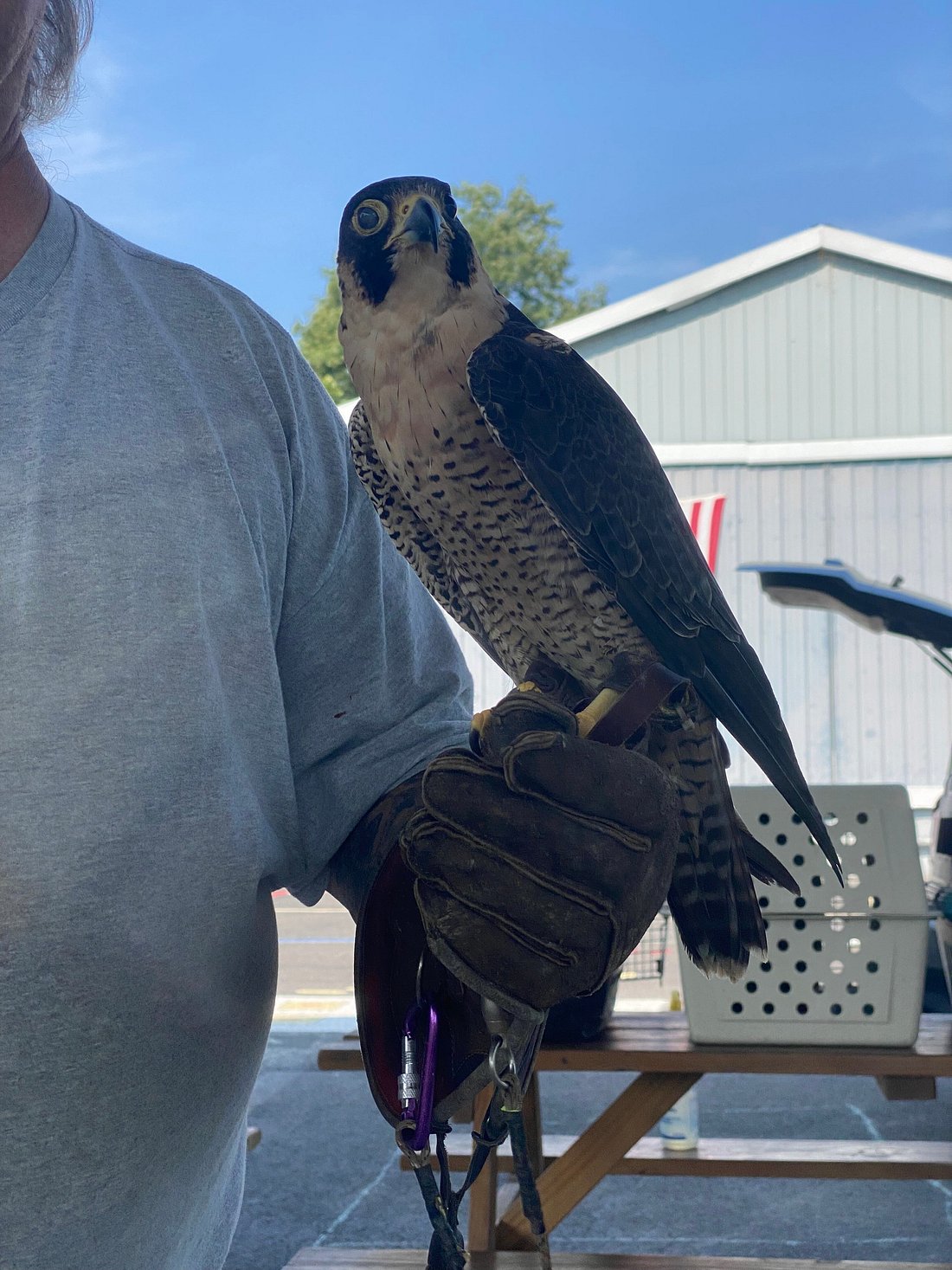
This bird also connects naturally to local birds of prey education. The Maryland DNR notes that the Deep Creek Lake State Park Aviary is home to non-releasable birds of prey used as ambassadors for Scales & Tales education. These ambassador birds help people learn up close, but they should not be confused with wild birds seen on trails or near the lake.
Where to look: Forest edges, large trees, open fields near woods, and quiet evening areas.
Easy clue: Large owl with feather tufts and deep hoots.
8. Scarlet Tanager
The Scarlet Tanager looks almost unreal when sunlight catches it.
The male’s bright red body and dark wings can flash through the summer canopy like a small flame. Females are more yellow-green and easier to miss.
This is one of the songbirds of Western Maryland that rewards patience. It often stays high in the trees, so listeners may hear it before they see it.
Where to look: Mature forest, leafy canopy, shaded trails, and quiet woods.
Easy clue: Red male with dark wings during breeding season.
9. Wood Thrush
The Wood Thrush does not need bright color to make people stop.
Its flute-like song gives the forest a deeper feeling. For many nature lovers, hearing a Wood Thrush on a quiet trail is one of the best wildlife experiences near Deep Creek Lake.
This bird prefers leafy woods and shaded understory. It is a helpful species for teaching families that birding is not a race. Sometimes the best thing to do is stand still and let the forest speak first.
Where to look: Moist woods, shaded trails, leafy understory, and forested slopes.
Easy clue: Warm brown back, spotted chest, and clear flute-like song.
10. Baltimore Oriole
The Baltimore Oriole brings color and music to spring and summer.
Its orange-and-black plumage makes the male easier to recognize, while its hanging nest can be a fun detail for families to learn about. It often uses tall trees, forest edges, and open woodland.
For anyone creating a simple Deep Creek Lake bird guide, the Baltimore Oriole is a strong bird to include because it is beautiful, memorable, and connected to Maryland identity.
Where to look: Tall trees, forest edges, open woods, and areas with flowering or fruiting trees.
Easy clue: Bright orange-and-black male and clear whistled song.
Where Should Visitors Look for Common Birds at Deep Creek Lake Maryland?
Birdwatching becomes easier when visitors stop looking everywhere at once.
Start with habitat.
| Habitat | Birds to Watch For | Simple Cue | Common Mistake |
| Open water | Bald Eagle, Osprey, ducks, geese | Scan high perches and open sky | Only watching the water surface |
| Shoreline and coves | Great Blue Heron, Belted Kingfisher, Wood Duck | Watch quiet edges and overhanging branches | Walking too fast |
| Mature forest | Pileated Woodpecker, Barred Owl, Wood Thrush | Listen for knocks, hoots, and songs | Expecting every bird to be visible |
| Forest edge | Scarlet Tanager, Baltimore Oriole, hawks | Watch where trees meet open space | Ignoring movement high above |
| Trails and understory | warblers, sparrows, thrushes | Pause often and let birds settle | Chasing every sound |
This simple method helps beginners avoid frustration. Instead of asking, “What bird is that?” first ask, “Why would a bird be here?”
That one question changes everything.
A Beginner-Friendly Way to Identify Birds
A bird may move too fast for a perfect photo. It may hide behind leaves. It may call once, then disappear.
That is normal.
Use this four-step method:
- Look at place: Is the bird on water, in a tree, on a trunk, in the sky, or near the ground?
- Watch behavior: Is it soaring, diving, hopping, wading, drumming, or creeping?
- Notice shape: Is it long-legged, chunky, broad-winged, tiny, or upright?
- Listen: Is the sound a rattle, whistle, hoot, knock, song, or harsh call?
This works better than starting with color alone. Light, age, distance, and season can all change how a bird appears.
What Most People Get Wrong About Birdwatching
Many people think birdwatching means memorizing names.
It does not.
Birdwatching starts with attention. Names come later.
Do this: Move slowly, listen often, and watch habitat edges.
Not that: Rush down the trail expecting birds to appear on command.
Do this: Use trusted resources like the Cornell Lab of Ornithology for bird sounds, behavior, and identification.
Not that: Rely only on color from a quick glimpse.
Do this: Treat each sighting as a gift.
Not that: Promise children they will see a specific bird at a specific time.
That last point matters. Wildlife is wild. The surprise is part of the experience.
Why Guided Nature Walks Help Families Notice More
Picture a family near Deep Creek Lake State Park.
One child wants to see an eagle. Another is more interested in skipping stones. The adults are trying to keep everyone moving, hydrated, and happy.
Then someone hears a rattling call.
A Belted Kingfisher darts across the cove, and suddenly the group has a shared mission. Everyone watches the shoreline. Everyone listens. Everyone has something to look for.
That is where a guided nature walk Deep Creek Lake visitors can enjoy becomes valuable. A guide can slow the pace, explain clues in plain language, point out habitat, and help the group connect birds to the larger story of the lake.
For families, that can turn “we went for a walk” into “we saw how the lake works.”
What About Birds of Prey Near Deep Creek Lake?
Birds of prey near Deep Creek Lake are especially popular because they are powerful, visible, and easy to get excited about.
Bald Eagles, Ospreys, hawks, owls, and vultures all help people understand food webs, habitat, flight, and hunting behavior. They also make strong educational subjects because they spark questions quickly.
The Maryland Park Service Scales & Tales program uses live non-releasable birds of prey and reptiles to promote wildlife stewardship and help visitors learn about native Maryland wildlife.
That matters because there is a difference between seeing a wild raptor at a distance and meeting an ambassador bird in an educational setting. Both experiences can be meaningful. Both should be handled with respect.
Quick Birdwatching Checklist for Deep Creek Lake Visitors
Before heading out, keep it simple:
- Bring binoculars if available.
- Wear quiet, comfortable layers.
- Choose one habitat to focus on first.
- Go early or later in the day when possible.
- Walk slowly near coves and forest edges.
- Keep distance from nests and wildlife.
- Use bird calls responsibly and avoid disturbing birds.
- Check current sightings on eBird if planning a serious birding outing.
- Let children notice movement, sound, and behavior before naming species.
A good birding day is not measured only by the number of birds seen. It is measured by how much more alive the place feels afterward.
Conclusion: The Best Bird Guide Is a Slower Walk
The Native birds of Deep Creek Lake are not just a checklist. They are part of the sound, motion, and character of the area.
A Bald Eagle over open water tells one story. A Pileated Woodpecker in the woods tells another. A Wood Thrush singing from the shade reminds visitors that some of the best moments are easy to miss when everyone is moving too fast.
For families, nature lovers, and first-time birdwatchers, the best approach is simple: slow down, look at the habitat, listen closely, and stay curious.
For visitors who want help turning birdwatching into a richer outdoor learning experience, All Earth Eco Tours offers guided nature walks, Birds of Prey education, kayak tours with wildlife viewing, family eco experiences, and outdoor learning near Deep Creek Lake. To ask about availability, call 301-746-4083 or email Carol@allearthtours.com.
FAQ
What are the native birds of Deep Creek Lake?
Native birds of Deep Creek Lake include Bald Eagles, Ospreys, Great Blue Herons, Belted Kingfishers, Pileated Woodpeckers, owls, tanagers, thrushes, and many other lake and forest species.
What birds live around Deep Creek Lake?
Birds that live around Deep Creek Lake include water birds, raptors, woodpeckers, owls, sparrows, chickadees, cardinals, crows, ravens, and seasonal songbirds.
What are common birds at Deep Creek Lake Maryland?
Common birds at Deep Creek Lake Maryland may include Great Blue Herons, Belted Kingfishers, Canada Geese, Bald Eagles, Pileated Woodpeckers, and forest songbirds.
Is Deep Creek Lake good for beginner birdwatching?
Yes. Beginner birdwatching near Deep Creek Lake is approachable because visitors can explore open water, coves, forest trails, and shoreline habitat in the same area.
What birds of prey can be seen near Deep Creek Lake?
Birds of prey near Deep Creek Lake may include Bald Eagles, Ospreys, Red-tailed Hawks, Barred Owls, Great Horned Owls, vultures, and other raptors of Garrett County.
What water birds are found on Deep Creek Lake?
Water birds on Deep Creek Lake may include Great Blue Herons, Belted Kingfishers, Wood Ducks, mergansers, Canada Geese, and other ducks depending on the season.
What songbirds live near Deep Creek Lake State Park?
Songbirds near Deep Creek Lake State Park may include Scarlet Tanagers, Wood Thrushes, Baltimore Orioles, chickadees, warblers, goldfinches, and other woodland birds.
What are the best wildlife experiences near Deep Creek Lake?
The best wildlife experiences near Deep Creek Lake often include birdwatching, guided hikes, kayak tours, shoreline walks, raptor education, and quiet time in forest habitat.
Are there family-friendly outdoor activities near Deep Creek Lake?
Yes. Family-friendly outdoor activities near Deep Creek Lake include birdwatching, nature walks, kayak tours, wildlife programs, guided hikes, and seasonal outdoor learning.
Do bird sightings happen year-round in Western Maryland?
Yes, some birds can be seen year-round in Western Maryland, while others are seasonal visitors. Migration, weather, habitat, and time of day all affect what visitors may see.