


Stress gets loud fast.
One minute, you are planning a relaxing trip to Deep Creek Lake. The next, you are juggling directions, dinner plans, weather, tired kids, unread messages, and the quiet thought that this vacation is starting to feel like work.
That is exactly why outdoor activities for stress relief matter.
In Garrett County, the outdoors gives people room to breathe again. Not in a dramatic, life-changing-in-five-minutes kind of way. More like a slow shoulder drop. A deeper breath. A walk where the phone stays in the pocket. A paddle across quiet water where nobody has to say much for the moment to feel good.
Key Takeaways
- Outdoor adventures can help people slow down, move gently, and reconnect with nature.
- Guided experiences make outdoor time easier by removing route planning, gear worries, and safety guesswork.
- Hiking, kayaking, nature walks, snowshoeing, and mindful outdoor experiences can support relaxation and emotional reset.
- Outdoor time can support well-being, but it is not a replacement for professional mental health care.
Why Does Nature Feel So Calming?
Nature gives the mind a break from constant input.
Screens, traffic, work alerts, and busy schedules all ask the brain to stay on guard. A trail asks something different. Notice the roots. Listen to the birds. Step around the mud. Feel the wind before the rain comes in.
That softer kind of attention can feel restorative.
The World Health Organization reported in 2024 that 31% of the world’s adults were physically inactive in 2022, which is one reason gentle, enjoyable movement matters. Outdoor recreation can make movement feel less like a chore and more like something people actually want to do.
As John Muir wrote, “But in every walk with Nature one receives far more than he seeks.”
That line still feels true on a quiet trail in Western Maryland.
Outdoor Activities for Stress Relief Work Best When They Feel Doable
The biggest mistake people make is thinking outdoor wellness has to be big.
A hard hike. A perfect sunrise. A full-day adventure. A backpack full of gear. A photo that proves everyone had a magical time.
But stress relief usually works better when the plan feels simple.
A short nature walk can help. So can kayaking for relaxation, a peaceful winter snowshoe, a slow foraging walk, or a guided hike where someone else knows the trail.
The goal is not to conquer Garrett County. The goal is to come back feeling more settled than when you started.
That is why the best outdoor adventures for anxiety relief often include three simple pieces:
- Place: Choose a setting that feels peaceful, such as a forest trail, lake, river corridor, or quiet overlook.
- Pace: Keep the activity comfortable enough that breathing stays steady.
- Presence: Notice what is happening around you instead of turning the outing into another task.
Call it the Place, Pace, Presence method.
It is easy to remember, and it keeps the day from becoming too much.
What Outdoor Adventure Fits Your Mood?
Different stress patterns call for different outdoor experiences.
Some people need movement. Some need quiet. Some need to laugh with their family and stop managing the whole day for once.
Here is a simple way to choose.
| If you feel… | Try this outdoor activity | Why it helps | Keep it simple by… |
| Mentally overloaded | Guided nature walk | Gives your attention something gentle to follow | Walking slowly and noticing sounds |
| Restless or tense | Beginner-friendly hike | Lets the body move without overdoing it | Choosing an easy or moderate route |
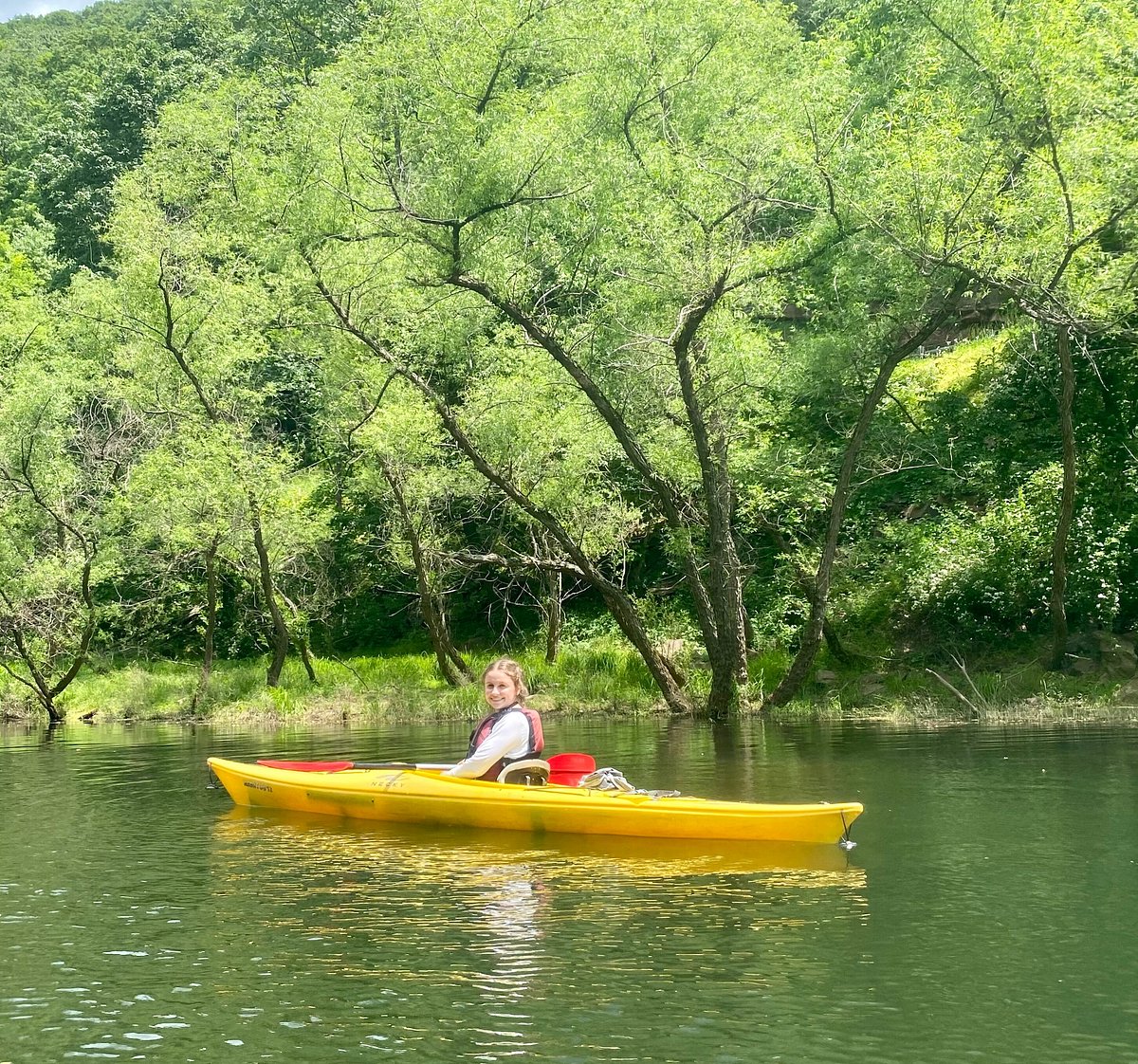
| Emotionally drained | Kayak tour | Water adds rhythm, quiet, and open space | Paddling at a relaxed pace |
| Screen tired | Forest bathing or outdoor mindfulness | Helps the senses wake back up | Putting the phone away |
| Winter stuck | Snowshoeing or winter hike | Adds fresh air and seasonal novelty | Dressing in layers |
| Curious but tired | Foraging walk or birdwatching | Turns attention outward without rushing | Asking questions and looking closely |
This is where guided experiences can make a real difference.
If you are visiting Deep Creek Lake and do not know which trail fits your group, a guided hike can remove the guesswork. If you want water without the stress of planning a route, kayak tours near Deep Creek Lake can make the day feel easier from the start.
Soft CTA: If planning the right outdoor activity already feels like one more thing on your list, start with a guided nature walk, kayak tour, or beginner-friendly hike. Let the route, timing, and local details be handled for you.
How Do Guided Nature Walks Help Reduce Planning Stress?
A guided outdoor experience does more than show people where to go.
It changes the mental load of the day.
Instead of wondering whether the trail is too muddy, whether the kids can handle the route, or whether the weather might shift, you can follow someone who knows the area. A good guide helps with pace, safety, seasonal details, and the little things most visitors miss.
In Garrett County, those details matter.
Spring trails can be muddy. Summer afternoons can turn humid. Fall hikes may draw more visitors. Winter outings can be beautiful, but conditions can change quickly.
A guide helps make those choices feel less stressful.
That matters for families, couples, friend groups, and busy professionals. The less time spent managing the plan, the more time there is to enjoy the experience.
What Most People Get Wrong About Outdoor Wellness
Outdoor recreation for mental health does not need to feel like a workout challenge.
It also does not need to be silent, serious, or perfectly mindful.
Sometimes the most restorative part of a hike is a funny conversation halfway up the trail. Sometimes it is watching a child get deeply attached to one “special” rock. Sometimes it is the quiet relief of realizing nobody in the group has asked what time it is.
Here is the better approach.
Do this
- Choose an activity that matches your real energy level.
- Dress for Garrett County weather, not just the forecast you hoped for.
- Bring water, layers, and comfortable shoes.
- Let the guide know if your group needs a slower pace.
- Leave room for pauses, questions, and unexpected views.
Not that
- Do not pick the hardest trail just to make the day feel worthwhile.
- Do not treat kayaking or hiking like a race.
- Do not expect children to enjoy nature the same way adults do.
- Do not ignore weather, terrain, or physical comfort.
- Do not use outdoor activities as a substitute for mental health care when symptoms are serious or ongoing.
Outdoor wellness is not about proving anything.
It is about making space.
What Could This Look Like Near Deep Creek Lake?
Picture a family arriving in Western Maryland for the weekend.
Everyone wants something different. One person wants peace. One wants adventure. One wants the kids off screens. Someone else is quietly hoping they do not have to organize every minute of the trip.
A guided hike near Deep Creek Lake gives the group a shared plan without turning one person into the unpaid tour manager.
The guide sets the route. The group learns about local plants, wildlife, water, and the landscape. The pace stays realistic. The day feels structured, but not stiff.
For couples, a quiet paddle can create space to reconnect without needing a packed itinerary. For friend groups, a nature walk or outdoor team-building experience can feel more memorable than another crowded restaurant plan. For families, guided hikes near Deep Creek Lake can turn “what should we do today?” into a real outdoor memory.
That is the heart of nature-based stress relief.
It helps people stop rushing past the place they came to enjoy.
Can Outdoor Activities Help With Burnout?
Outdoor activities can support burnout recovery by helping people step away from the same mental loops.
Burnout often makes even fun feel like effort. That is why the best outdoor activities for burnout are usually gentle, structured, and easy to start.
Think less “epic adventure” and more “calm reset.”
Good options include:
- A slow guided nature walk
- A quiet kayak tour
- A short hike with scenic pauses
- Forest bathing or outdoor mindfulness
- A winter walk or snowshoe outing
- A family-friendly nature program
The key is to choose something that does not demand too much decision-making.
If a person is already tired, the activity should not create more pressure. It should offer a clear path into fresh air, movement, and nature connection.
A Gentle Safety Note Before You Go
Outdoor activities can support relaxation, mood, connection, and general well-being. They should not be treated as a cure for anxiety, depression, chronic stress, panic attacks, trauma symptoms, or any medical condition.
If stress or anxiety feels severe, persistent, or hard to manage, it is important to speak with a licensed healthcare or mental health professional.
Before heading outside, choose an activity that fits your health, mobility, comfort level, and experience. Check weather conditions, dress in layers, bring water, and review tour details before booking.
Nature is powerful, but preparation still matters.
Conclusion: Let the Outdoors Make the Day Lighter
Outdoor activities for stress relief do not have to be complicated.
A trail can help. A paddle can help. A quiet walk through the woods can help. So can a guide who knows the area, understands the weather, and helps your group relax into the experience instead of managing every detail.
Deep Creek Lake, Garrett County, and the wider Western Maryland landscape offer more than scenery. They offer space to breathe, move, notice, laugh, and come back to yourself a little.
Ready to plan a calmer day outside? All Earth Eco Tours offers guided hikes, kayak tours, nature walks, and seasonal outdoor adventures near Deep Creek Lake. Call 301-746-4083 or email Carol@allearthtours.com to choose the right experience for your group.
FAQ
How do outdoor activities help reduce stress?
Outdoor activities help reduce stress by giving the mind a break from screens, noise, and constant decisions. Gentle movement, fresh air, and natural surroundings can help the body feel calmer.
What are the best outdoor activities for stress relief?
The best outdoor activities for stress relief are usually simple: nature walks, easy hikes, kayaking, snowshoeing, forest bathing, birdwatching, and outdoor mindfulness.
Does hiking help with anxiety?
Hiking may help with anxiety by combining steady movement, fresh air, and a focused trail experience. Choose a route that feels safe and manageable, not overwhelming.
Why does being outside help you relax?
Being outside helps you relax because nature gives your senses something softer to follow. Water, trees, birds, and open views can help shift attention away from stress.
Is kayaking or hiking better for stress relief?
Kayaking is often better when you want quiet rhythm and water views. Hiking is better when your body needs movement and your mind needs a clear path to follow.
What are relaxing things to do near Deep Creek Lake?
Relaxing things to do near Deep Creek Lake include guided hikes, kayak tours, nature walks, peaceful overlooks, wildlife watching, snowshoeing in winter, and slow outdoor family activities.
Are guided hikes better than self-guided hikes for stress relief?
Guided hikes can be better when you want less planning and more local knowledge. Self-guided hikes work well if you already know the trail, weather, and route difficulty.
What outdoor experiences does All Earth Eco Tours offer?
All Earth Eco Tours offers guided outdoor experiences near Deep Creek Lake, including hikes, kayak tours, nature walks, snowshoeing, foraging walks, wellness activities, and family-friendly programs.
Is All Earth Eco Tours a good option for families?
Yes. All Earth Eco Tours offers outdoor adventures for families who want a guided, nature-focused experience without having to plan every route, timing detail, or activity on their own.